Published by

Shop Culture
Joe Riscica Jr. took over his father’s Deer Park repair shop in 2019 and changed how customers approve work. He explains what he kept, what he changed, and where the friction was.
Play audio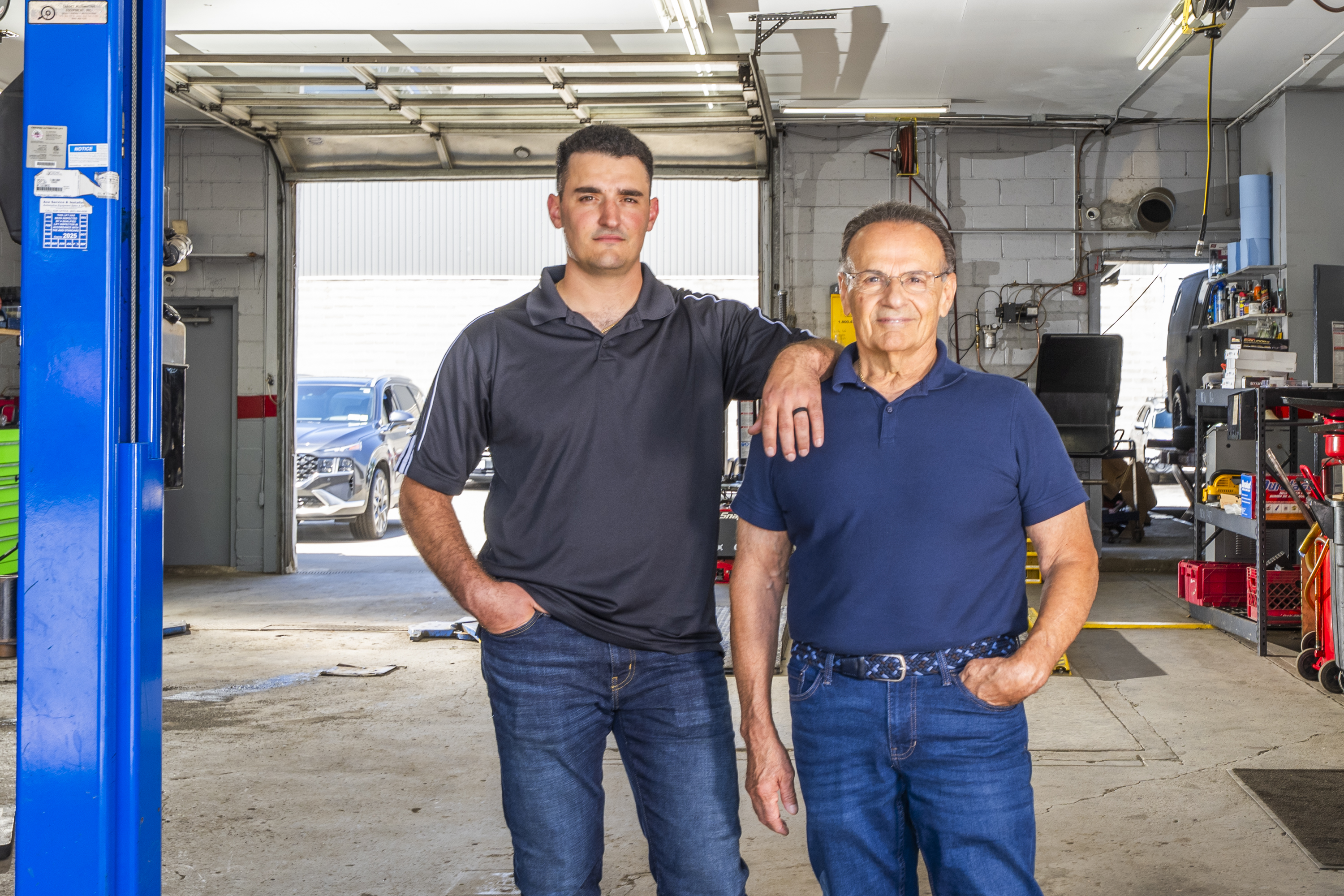
Table of contents
For 40 years, customers at a Deer Park, New York, repair shop approved work on faith. Joe Riscica Sr. would tell customers at Joe Riscica's Auto Repair what their car needed, what could wait, and they trusted him. Today, his son texts customers a photograph of their brake pads and then calls to walk them through it.
Joe Riscica Jr. says he didn’t replace his father’s method. He thinks he translated it to the modern day.
“It’s another level of confidence for the customer,” he says. “We didn’t have a big issue with getting trust from customers upfront because of the reputation that’s been built.”
That reputation started in 1982, when Joe Riscica Sr. was renting a small garage. He outgrew it within a couple of years, moved, and eventually bought the building the shop occupies now. The family has been at that address since 1993, the year Joe Riscica Jr. was born.
Joe Riscica Jr. took over the auto repair shop in 2019. They used a coaching program to ease the transition, which Joe Riscica Jr. describes as teaching two different lessons at once: how his father could step back, and how he could step up.
He had come out of the bay, not a business program. The office was new territory. What convinced both of them it would work was watching Joe Riscica Jr. handle the front counter.
“A big transition was customers saying, ‘I want to speak to Joe, your dad,’” he says. “I’d say, ‘Well, he’s not here today. I’m more than capable of helping you out.’”
Three technicians stayed on from his father’s crew. One was going on 20 years. So Joe Riscica Jr. changed nothing.
“My philosophy taking over was, the first few years, keep things exactly the same,” he says. “I really wanted to make that transition smooth for the sake that they didn’t feel worried or not confident with the changes.”
Ask Joe Riscica Jr. what people know the shop for and he answers in one word: honest. Ask him what that looked like operationally before anyone was taking photos, and he describes a system, not a personality.
His father built trust in the first two or three interactions. He fixed cars right the first time, so a customer who dropped off a car knew they would drive it home. And he told people what they did not need yet.
“His philosophy was to do right by the customer,” Joe Riscica Jr. says.
The business model behind it was modest on purpose.
“If our bills are getting paid and everybody’s happy, we’re happy,” Joe Riscica Jr. said.
That is the standard Joe Riscica Jr. inherited. The question he spent his first years as owner working on was how to deliver it to customers who now expect to see what they are paying for.
Jess Kelley, who handles marketing for the shop, frames the two generations this way: Joe Riscica Sr. built the business on handshakes, personal relationships, and a reputation earned one customer at a time. Joe Riscica Jr. is carrying those same values into an industry defined by technology and transparency. They agreed on the standard but disagreed on how to deliver it.
“Joe Jr. is figuring out how to carry those same values into an industry now defined by technology, transparency, and customers who expect to see and understand what they're paying for,” she said.
Joe Riscica Jr. started pushing to change shop management systems as soon as he started taking over the business. His father would not budge.
“That was kind of where it was deadlocked,” he says. “This is the way until I retire. Nothing’s changing.”
Joe Riscica Jr. does not hold it against him. A man two years from retirement did not want to learn a new program, and Joe Riscica Jr. says the objection was about timing, not stubbornness.
“Had I been in that position 10 years prior to him thinking about retiring, he would have probably gone through with it,” he said.
The harder argument was cell phones in the bays. Joe Riscica Sr. had spent most of his working life without one. Joe Riscica Jr. had to make the case that a technician checking a text does not cost the shop anything.
“The numbers are not lying,” he says. “The phones are not slowing them down. The jobs are getting done. The guys are making their hours.”
If the work had started coming back, he says, that would have been a different conversation. It wasn’t happening.
The shop changed systems in 2023. Joe Riscica Jr. did not make digital vehicle inspections (DVIs) mandatory right away. That came later, and he has tightened the requirement over the past year.
There is no photo quota, and Joe Riscica Jr. is firm about that.
A new car in for a New York State inspection with 5,000 miles on it does not warrant 20 DVI pictures, and he will not hound a technician for them. With vehicles that have mileage past 25,000 or 30,000 miles, photographing the brakes becomes mandatory. Any excessive damage gets documented. On cars that warrant it, Joe Riscica Jr. expects at least five DVI photos.
A safety check runs by default on almost every vehicle that comes in, with exceptions for a quick flat repair or a tail light the shop can handle in the parking lot.
Brakes get photographed whether they are good or bad, which is a deliberate choice.
“It’s not only bad things that they want to see,” Joe Riscica Jr. says. “They also want to be told, ‘Oh, you got time on your tires, you got time on your brakes.’”
For a customer who dropped the car off and left, the shop texts the inspection report with instructions to call. The report does not do the work alone.
“We’re not assuming that they understand what they’re looking at,” Joe Riscica Jr. says. “This way we have the opportunity to answer the questions so they feel confident about any recommendations we’re making.”
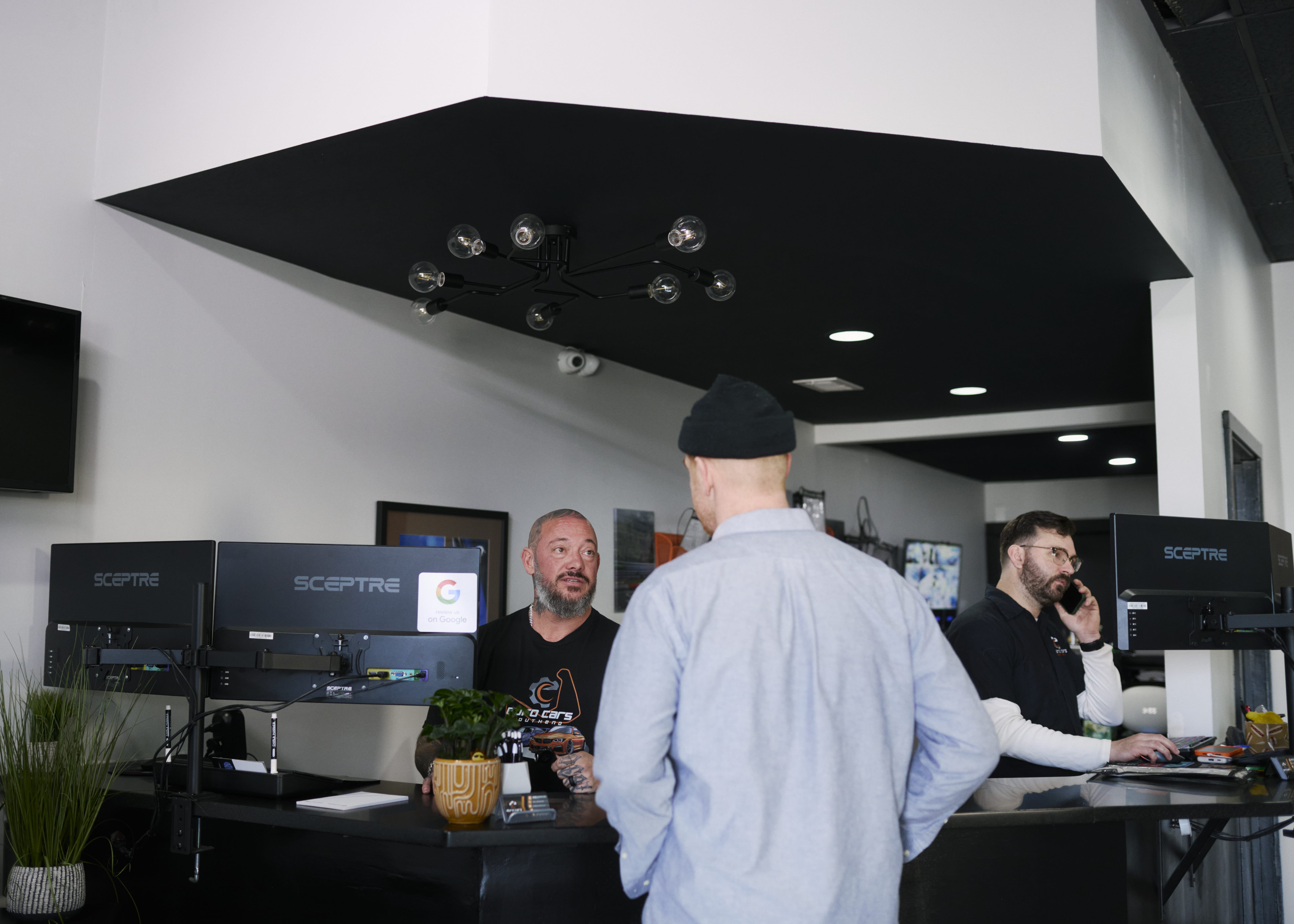
For in-store customers waiting on a vehicle, there is a large monitor on the front desk. The adviser turns it and goes through the results alongside them, pulling up photos as questions come.
“It’s the same destination, just a different highway,” Joe Riscica Jr. said.
Joe Riscica Jr. credits a lot of the change to something less visible than the photos. The shop moved from handwritten writeups to an electronic safety checklist.
“That really increased the amount of items that were getting recommended on a regular basis,” he says.
No more going back to a technician to ask what he meant, no more “deciphering hieroglyphics from somebody that has chicken-scratch handwriting.”
More than time saved, it made the work uniform.
“Every car is being checked out the same way now because everybody has access to see that checklist,” Joe Riscica Jr. said, adding that getting the list right took iteration, adding a line here and there over several months.
Declined work no longer disappears, either. It stays on the record so it comes up when the customer returns, or is sent to them in a reminder a month after the visit. This leads to more bookings and additional work the shop might have otherwise missed.
Joe Riscica Jr. built 101 canned jobs, transferring pre-written descriptions by hand and splitting tune-ups by cylinder count so an adviser never has to specify how many plugs a job needs.
More work getting approved than ever before.
Joe Riscica Jr. says the pushback to learning a new shop management system was short and predictable, and it ended for a reason he could have predicted, too.
“There was a little pushback just because it’s a whole new thing to learn,” he says. “But after the first couple weeks, they saw that it was benefiting them because the sale rates on jobs were increasing.”
Higher sales moved their bonus incentives. The argument made itself.
Joe Riscica Jr. invests in the crew outside the system as well. He sent his electrical diagnostics technician to a training course out west and says yes when that technician brings him classes he wants to take. Vendor seminars fill in the rest. Joe Riscica Jr. sometimes tags along himself, just to understand what his people are learning.
When asked what he would tell an owner who thinks DVIs are one more task piled on technicians, Joe Riscica Jr. does not beat around the bush.
“I would say it’s time to retire,” he said. If you’re not willing to change with the game, then it’s time to retire.”
The shop takes in five to 10 new customers a week on top of a base of people who have known Joe Riscica Jr. since he was born. The shop is booked a week out. Late summer slows down while families sort out the school year, but the trend line is the trend line most of the year.
“The writing’s on the wall that we have to do something to grow,” he says.
What that looks like is still open. Maybe it’s more capacity in the current building, a loaner program for customers facing bigger repairs, or a second location. Joe Riscica Jr. is still working out those details.
There was one outcome of the handover that Joe Riscica Jr. did not expect. Transferring a business from one generation to the next is supposed to strain a relationship. Joe Riscica Jr. said the relationship with his father became even stronger.
“A big part of that was me getting out of my own way,” Joe Riscica Jr. says. “There’s a reason why things are being done the way that they are, and there’s a reason why he’s still in business this many years later.”
Questions from the floor
How do you take over a family repair shop without losing the staff?
How do digital vehicle inspections change the way a customer approves work?
Does a photo report replace the phone call?
How many photos should a digital vehicle inspection include?
Do technicians push back on digital inspections?
What do you do when the outgoing owner will not change systems?
What happens when a customer declines work?
FILED UNDER
Shop Culture
THE PEOPLE BEHIND THE STORY
Kris Turner