Published by

Customer Experience
Most shops get reviews by luck. Here is how service advisors turn review requests into a system that holds up under Google's April 2026 rules and the FTC's review rule.
Play audio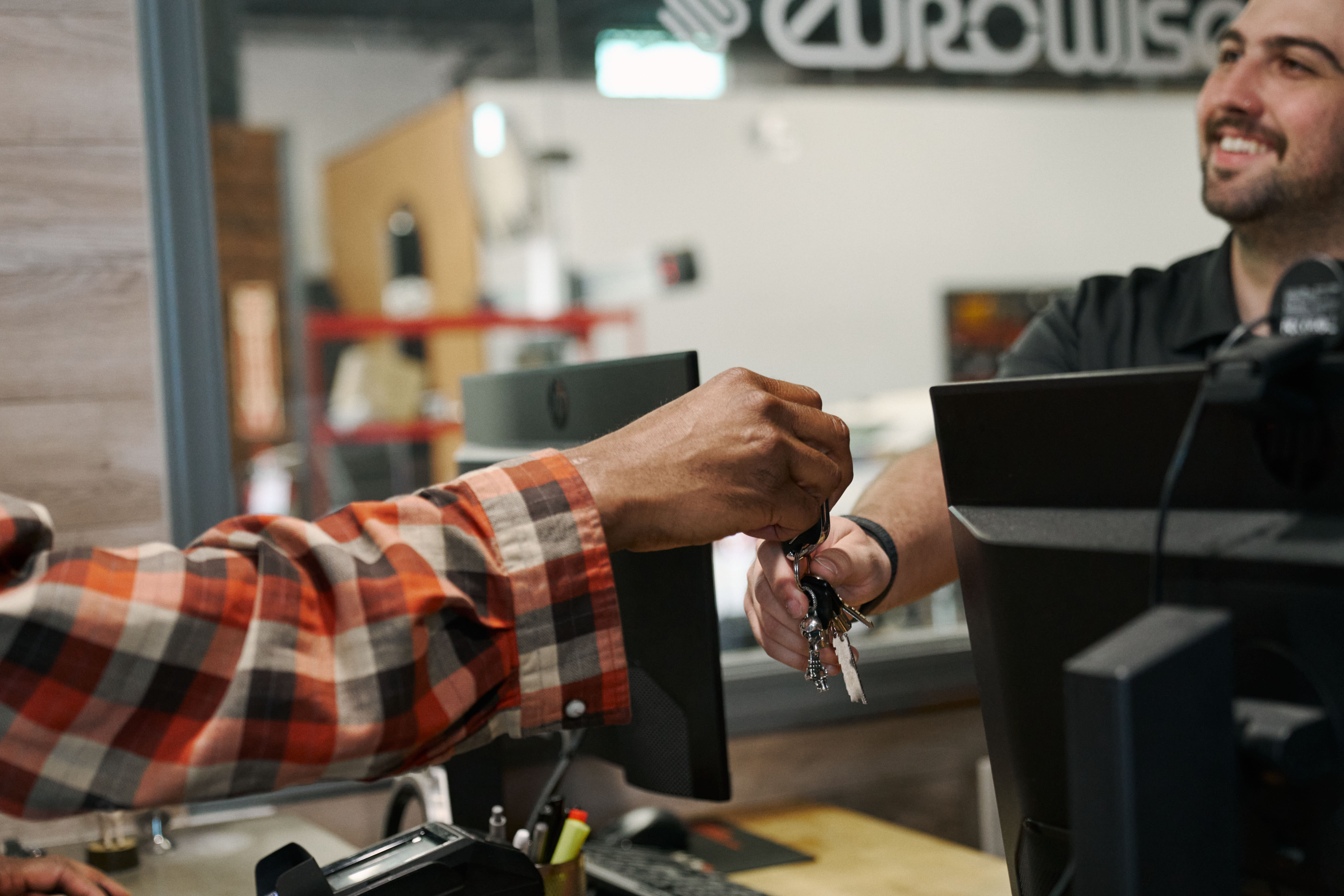
Table of contents

Most auto repair shops don't have a standardized review process. They have habits that lead to inconsistent reviews. A customer is happy at pickup, an advisor might remember to ask for a review, and sometimes one shows up. Most weeks, nobody asks and nothing shows up.
That is why your review count spikes one month and flatlines the next.
Almost every driver reads reviews before picking a shop. And a growing share now gets recommendations from AI tools that pull from those same reviews. In spring 2026, Google rewrote its rules for how businesses can ask. Some of the most common shop tactics, like asking customers to mention the advisor by name, are now policy violations.
The fix is a system that asks every customer for a review, the same way, without leaning on anyone's memory or mood. Here’s how to build one.
Picture two shops closing 300 repair orders each per month.
The first shop asks for reviews when an advisor remembers. That works out to maybe 20 requests a month, which yields only about two reviews per month. The second shop sends a review request after every repair order closes. That's 300 requests a month, which easily turns into 30 reviews. Over the course of a year, that's 360 reviews.
Both shops serve the same customers, and the quality of the work is the same. The second shop simply asks everyone for a review.
BrightLocal, a local search marketing firm that surveys about 1,000 U.S. adults every year, found in its 2026 Local Consumer Review Survey that 78% of consumers were asked for a review in the past year. Of those asked, about two in three said they wrote one. People say yes far more often than shop owners expect. The bottleneck is almost never willingness. It is whether anyone asked.
In April 2026, Google added new language to its Maps user-generated content policy. If your review process was built before then, parts of it might now be against the rules.
Google's policy now says merchants cannot:
What Google still allows is plain. You can ask customers to share a genuine experience, as long as you offer nothing for it and make no attempt to steer the rating or the words.
U.S. federal law points the same way. The U.S. Federal Trade Commission's Consumer Reviews and Testimonials Rule, in force since Oct. 21, 2024, bans fake reviews, bans incentives tied to a review's sentiment, and bans suppressing negative reviews. The maximum civil penalty is $53,088 per violation under the FTC's current penalty schedule. The rule explicitly allows a business to make general requests to its customers for reviews.
Read together, the two rule sets describe the same design. Ask everyone for a review the same way.
More than most shops think, and more recent than most shops have.
BrightLocal's 2026 survey puts numbers on what shoppers look for:
Run that against your own profile. If you have 85 reviews but only four are from the last 90 days, most shoppers are effectively seeing four reviews. A burst of 40 reviews from a push you ran last fall doesn't count for the person searching in March. You need a steady flow every month, which is the case for a system over a campaign.
Trust is the other reason reviews carry so much weight in this trade. AAA's survey of U.S. drivers found two in three didn't trust repair shops in general, and 76% of them pointed to unnecessary repairs as the reason. Shoppers aren't just checking that you're good. They're checking that you're honest.
AI search raises the stakes further. BrightLocal found 45% of consumers now use ChatGPT or similar tools for local business recommendations, up from 6% a year earlier. About 42% trust those recommendations as much as written reviews. AI answers are assembled largely from the same review profiles and listings people already read. A thin or stale profile is thin and stale there, too.
The review request should go out because a repair order closed, not because someone remembered. Most shop software and texting tools can send a message automatically when a repair order is marked paid or picked up. If yours can't, an end-of-day list of closed repair orders and a 10-minute texting block does the same job.
This also keeps you clean on quotas because everyone gets asked for a review.
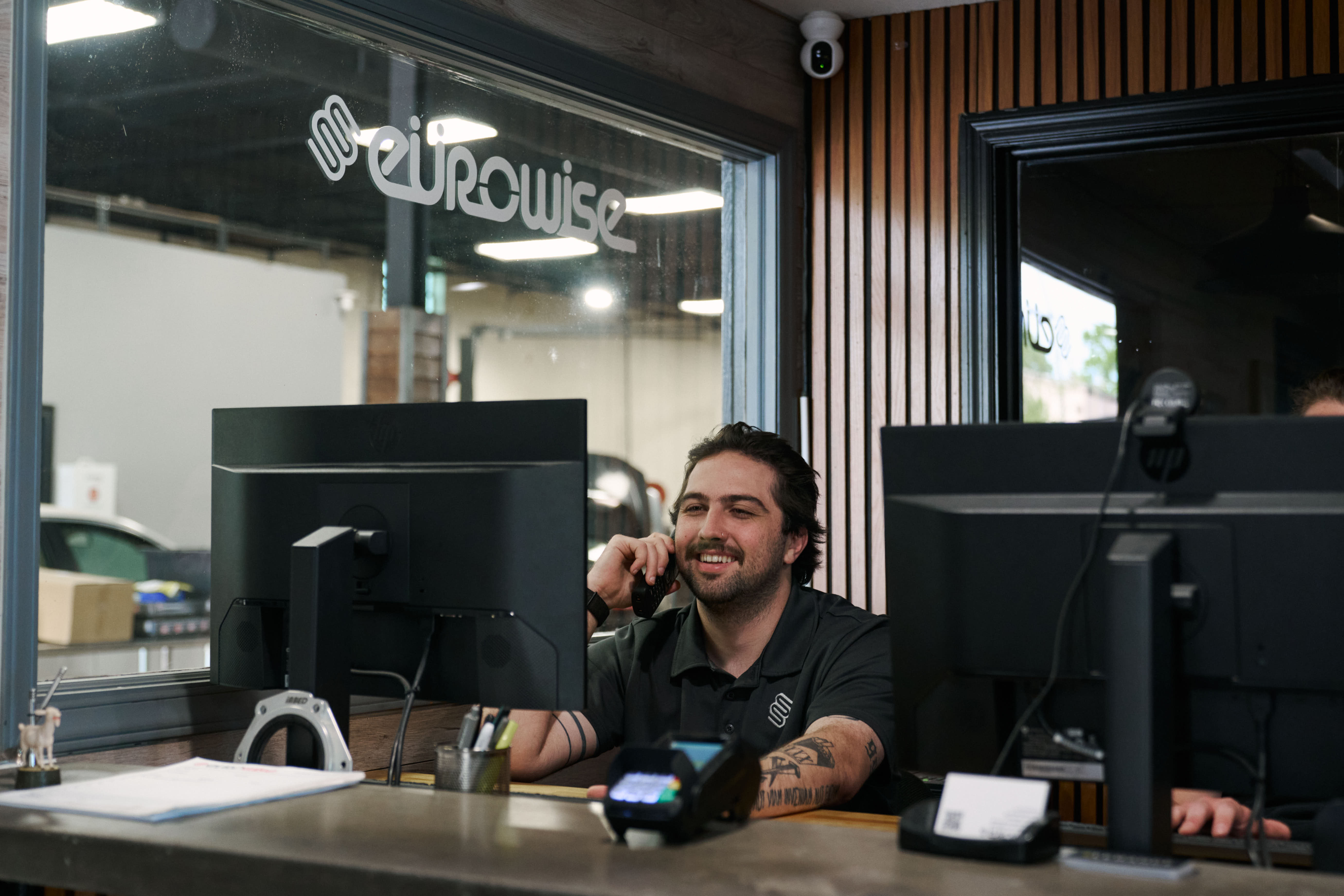
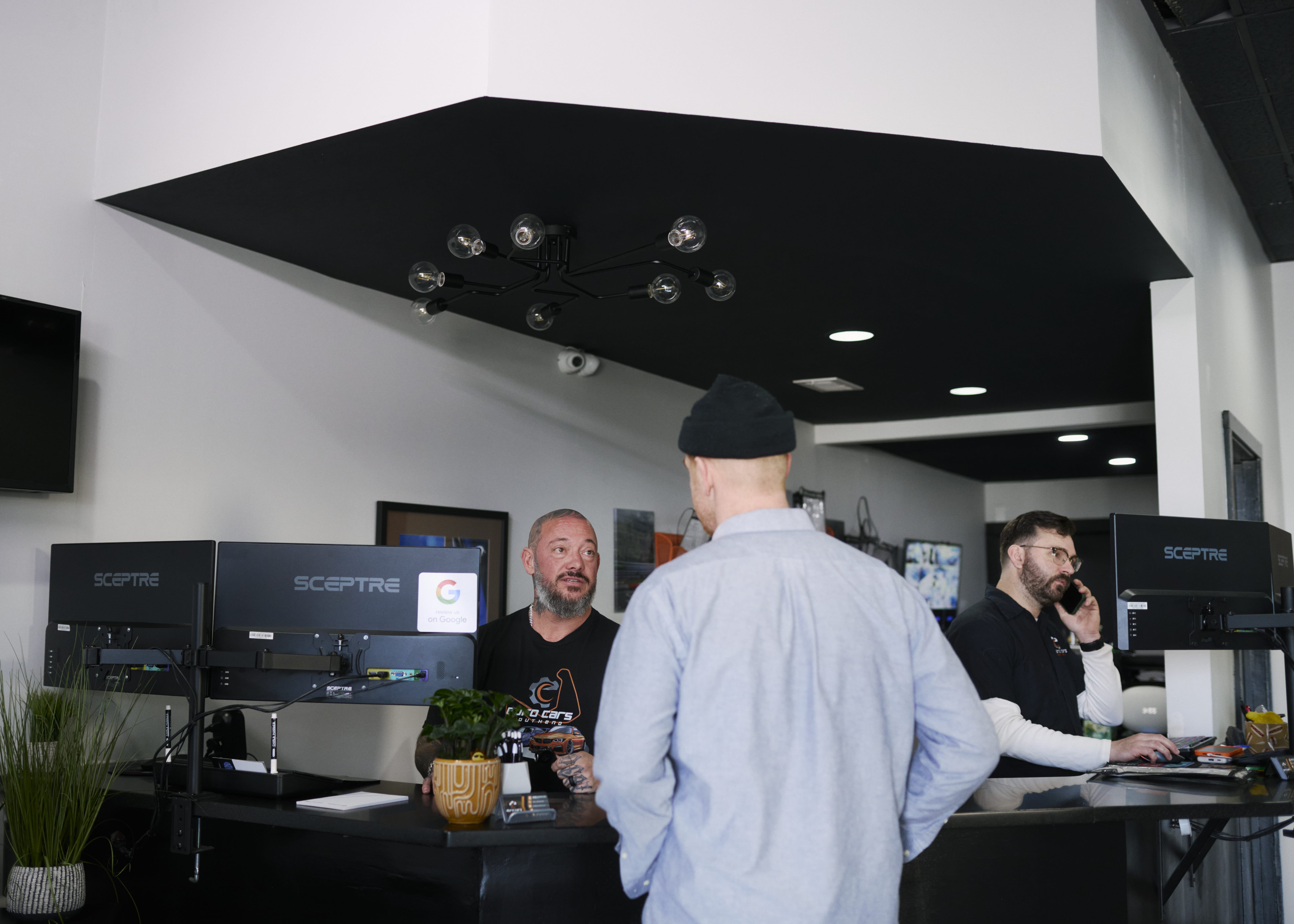
Google's policy now names on-premises pressure as a violation. The counter is also the wrong moment on its own terms. The customer is paying, holding keys, and thinking about traffic. Send the request one to three hours after pickup, or the next morning for late-day pickups. The customer has driven the vehicle. The brake noise is gone. That is when "how did we do?" lands.
The advisor's job at the counter is to set up the ask, not make it: "You'll get a text from us this afternoon asking how everything went. If anything's off, call me first. Here's my card." That line gives an unhappy customer a path to you before they go to Google. The review link still goes to everyone, so it isn't gating. It is service recovery.
Specific content requests are out, so keep it open-ended. A good review request looks like this:
"Hi [first name], thanks for bringing your [vehicle] in today. If you have a minute, we'd appreciate an honest review of your visit: [link]. Reply here if anything isn't right and we'll take care of it."
What's not in it: no staff name, no five stars, no mention of the service advisor, and no discount. Every customer gets the same message and is allowed to respond in their own words.
In its 2025 survey, BrightLocal found email was the channel consumers said they were most likely to respond to, at 40%, with text and phone both following. For a repair shop that already texts the customer about approvals and pickup, text is the natural channel. Use the direct review link that opens the write-a-review box, not your profile page.
A card or sign with a QR code at the counter is fine as a passive option. Handing a customer a tablet, or waiting while they type, however, is not.
A system that generates reviews and ignores them is half a system. BrightLocal found 80% of consumers are more likely to use a business that responds to all of its reviews. The reverse holds too:
Assign the response. Rotate it weekly between advisors. Reference the actual job, whether that was brakes, an alignment, or an intermittent no-start, in two sentences. For a negative review, thank them, state what you'll do, and move the conversation to the phone.
Don't measure reviews per advisor. That is still a quota, and it pushes people toward the easiest reviews to collect: in person, in same-shift clusters, with scripted wording. Those are exactly the patterns Google says it flags.
Measure the system instead:
Review these four at your weekly meeting the same way you review car count and average repair order.
This is the objection every owner has, and there are two concrete answers.
First, the data. BrightLocal found consumers are twice as likely to write about a positive experience (60%) as a negative one (29%). Unhappy customers write reviews whether you ask or not. Happy ones mostly don't unless you do. Asking everyone shifts the mix toward the people who were going to stay quiet.
Second, the design. The "call me first" line at the counter and the "reply here if anything isn't right" line in the text pull problems to you before they go public. You are not filtering who gets the link. You are giving everyone a faster path to a fix. That is the difference between service recovery, which is good practice, and review gating, which is prohibited.
A profile with 150 reviews at 4.6 stars, with a real response under the handful of two-star reviews, reads as a real business. A profile with 18 reviews at 5.0 reads as a business that only asks its friends.
Questions from the floor
How do I ask a customer for a review at my auto repair shop?
What should the review request text say?
Can I ask customers to mention my service advisor by name?
Can I run a review contest between advisors?
Can I offer a discount or a free oil change for a review?
Is a QR code at the counter allowed?
How can I automate review requests?
FILED UNDER
Customer Experience
THE PEOPLE BEHIND THE STORY
Kris Turner