No items found.
No items found.

Casey’s Automotive Grew with the Power of Support

Bryan Jewett has always been a gear head. In 2000, right out of high school, he got a job working at Advanced Auto Tech. The first tool they handed him was a broom, but it didn’t take long for them to hand him a wrench so that he could begin working as a mechanic. Five years later, Bryan started working at Casey’s Automotive, a shop owned by Bill Casey.

December 12, 2025

|

Read time: 3 min

$420

Avg. Repair Order

800

Avg. Car Count

20

Number of Employees

Average Car Count

Number of Employees

Number of Bays

Bill gave him a piece of advice that stuck with him for years to come, “We’re in the service industry, not the sales industry. Focus on relationships, not on sales”. In 2015, Bill expressed that he was ready to retire, and Bryan was ready for a new challenge. Bill Casey decided to leave his company in the hands of someone he could trust to grow the business and stay true to his values, his mentee, Bryan Jewett.

In 2017, Casey’s Automotive opened its second location. Bryan continues to invest in Casey’s and everyone who relies on it—his family, his team, his teams’ families, and the good people of Chantilly and Sterling, Virginia.

shop owner

Creating a Culture for Achieving Goals

This field is a tough field to be in, especially as a technician. The absolute truth is that nobody wants to buy the product of automotive repair. It's not a fun purchase. People want to buy new iPhones. They want to buy new running shoes. They want to buy things, toys, stuff they can play with. Automotive repair is kind of like one of those things where it's like, "I have to buy an alternator because my car doesn't work, and if my car doesn't work, I can't go pick up my kid at soccer or go to my job."

If my team can’t enjoy the place that they're at, and they are at that location for 8 to 10 hours a day, it's a huge part of their life that they’re just not enjoying.

Now, I'm not saying that we're running around here playing tic-tac-toe all day. What we try to do is make it a better environment. So, we got everybody's input about what they want to get out of their job at Casey's, and we built our motto and our mission statement around that. They wanted an opportunity to grow. They wanted the opportunity to have job security. They wanted to enjoy the place that they worked at. That's really where that culture change came in.

I was like, "Alright. Well, how do we do this?" The obvious things, giving someone the opportunity to have job security and to grow, that's not rocket science.

You need to grow the business so that the individual can grow. The business can't grow without having that individual, so the two kind of go hand-in-hand.

Just trying to meet the needs of my employees and listening to the basic things that they wanted was how we changed the culture.

Every January, we do a goal-poster day. Every employee that works for us writes down their goals, no matter what they are—professional, personal—and then I go out and buy a hundred different magazines. They get poster boards, cut out pictures that represent their goals, and they glue them to their poster board. That way they can track their goals. But to get a bunch of grown men around a table to play arts and crafts and then kind of break down the barrier of that personal drive that they have, it really creates some camaraderie between them.

shop owner and team

The neatest thing is when they cross things off their goal board throughout the year, and then when we do that first meeting in January about the goal posters, and they stand up and say, "Hey, listen. In 2019, I never thought I'd end up buying a house that has a separate garage and a nice patio. Me and my wife completed that in 2019." It's awesome to be able to see that. And helping your employees define their goals and then maybe even complete their goals, it goes right back to our mission statement about growing as individuals.

Fun With the Off-Road Community

Our main customers are local families. 90% of the work we do is on Toyota Camrys, Honda Minivans, F1-50 pickups—you know, the normal, everyday driver stuff. And then we have some specific niche customers that are kind of your off-roader type customers: big wheels and tires, Jeeps, and lift kits. Off road vehicles are kind of our specialty, the fun stuff that we do. I've always been like a five year old at heart. I've always liked trucks. The bigger the truck, the better.

About four years ago, we hired a guy who worked at an off-roading shop and, naturally, he brought some of those customers over with him, and we got more into that market. So just as a team building thing, we'll do some off-roading events and bring our team out there, try to meet up with our customers out there on the trails.

What we'll do is set up at a place that usually allows camping and trail riding. We'll rent a campsite, set up trail riding, grill food, cook breakfast, and just kind of get together outside of work. We'll reach out to our customer base, people who have done some of that off-roading work on their vehicles, and of course our employees and our families.

loaner Jeep

People spend a lot of money on these rigs, so it's great to be able to help them set something up and get together some type of event where they can actually use that Jeep or truck or SUV with their lift-kits and their wheels and tires and their wench upgrades, or whatever it might be. We get them out on the trail and have some fun.

Now, when we do an event, Casey's will sponsor the event by doing giveaways, setting up the event, and making sure that there is insurance for the event. We gave away a winch at our last event. It was like an 8,000 pound winch. We'll give away light bars all the way down to like, toe straps, D-Rings, just off-roading accessory type stuff. But it's really just meeting the people and supporting the local off road community.

"The Most Awesomest Car"

Every year we do Casey's Automotive Spring Fling and Car Show, which benefits Ellie's Hats. Ellie's Hats is a great organization that supports families of kids who have been diagnosed with cancer. Contestants pay to show their car at the event. We have a lot of free family fun activities, and we hold a silent auction. All the proceeds go back to Ellie's Hats. We raised $4,000 the first year, $6,000 the second, and $8,000 the third. We’re shooting for $10,000 this Spring.

team fundraising

We build the trophies for that car show out of motor parts: pistons, bearings—stuff like that. We'll pick children from the crowd and have them pick their favorite car to give out awards for stuff like “The Most Awesomest Car” or “The Super Duper Truck Award” .It's cool! It's a really neat event. Really fun. A lot of music and food. We open up the shop so that people could go in and out of the shop. People flood the parking lot with just the most unbelievable cars. It really brings a lot of people together and makes everyone happy.

car show

Getting the Support I Need

What really matters when you're running a business is: do you have clients? Are you making them happy? Being there for my team and my community is a big part of that because my guys have personal things they want to accomplish. And the truth is, if they can do their job better, that means that they can prosper more at their job, be there for our clients, and in turn, make more goals for themselves. A big part of supporting my team is having a shop management system that supports us.

We knew that we wanted to change from what we were using to a cloud-based system. The system that we were using for our courtesy inspection and our pictures never really played nicely with our operating program.

One problem we found with many newer systems was that the courtesy inspection was not a separate function within the program. A huge benefit to the customer is to be able to go through the inspection and then the estimate. When you provide pictures and the estimation and dollar amount, the only thing a customer sees are the dollar amounts. I don't care how beautiful or ugly the pictures are. I don't care what description you have in there. They see dollar amounts.

And if you're focused on helping the customer, you need to put an emphasis on, "Here are the conditions of repair. Here are the conditions of maintenance." and providing that in a separate function—the courtesy inspection—allows them to digest that. Then you can go over what things cost, what is important, what they can hold off on, and what they need to do now.

The fact that Tekmetric had a courtesy inspection and the estimate as two separate functions was a game changer. It was really a no-brainer. The support we got from Tekmetric was another great thing for us. If I had an issue, one, there's a community, and two, somebody from the company would reach out to us immediately for assistance. The system that we were using took weeks to get back to us.

One of the coolest things that happened when we switched to Tekmetric was that immediately, our long-term clients were like, "Wow. I really like this new system you're using. I've never seen it before!" It was separating us from our competition, making us look like we're from 2020. Their ability to decipher what's going on with their car, dissect that and understand it was very transparent. They could say "approve, approve. Decline, decline" right from their cell phone. Our customers love it. They think it's awesome.

And my team loves it, too. Hour one, everyone was resisting change, and it was the change that they didn't like. Now? The speed at which it allows my counter to write service, price parts, talk to customers, interact there, approve jobs or decline jobs-- that speed has doubled. It has improved two-fold. So if it took them 20 minutes to write an estimate, it's taking them 10 minutes.

And my technicians, the system they were using made it hard for them to talk to my advisers. When their tablets were crashing, it was harder for them to write up a vehicle for the issues. Not now. Now, with Tekmetric, that part is easier for them. They get to look at more cars. They get to interact with the car and with my advisers quicker. The shop, across the board, loves it. And we haven’t had to deal with a single crash of the system, which was always something that would happen with our old systems.

Tekmetric supports me by giving me a window into my shops to see what's going on. I can open that up from my phone, whether I'm in Arizona or Starbucks or upstairs. It allows me to be there for my team and have the confidence that I can open up a third location.

The Shop Overview immediately gives me the car count and the average repair order. It shows me what is a work in progress, what cars are completed, what estimates have been given out. I can pretty much see if it's going to be a busy week or a slow week on that page.

You gotta remember, auto repair is not a product people want to buy, so they don't care if you have a sale on auto alignments. But they do care if they're past due for an oil change. With Tekmetric, I can reach into our database, see who’s due for an oil change or repairs, and basically reach out and touch my customers on the shoulder and say, "Hey, listen. The last time you were out for an oil change was 3 months ago. We have some openings. Come on in and make an appointment." It ensures that I’m always looking out for our clients, and that we’re always helping people.

I'm not the best mechanic. I'm not the smartest businessman. I've just been able to help my employees grow. Help them provide. Help them have the opportunity to get the things they want professionally, and naturally the business just grows around that.

For more information about Casey's Automotive, visit caseysautomotive.com

Average Car Count

Number of Employees

Number of Bays

Recommended stories

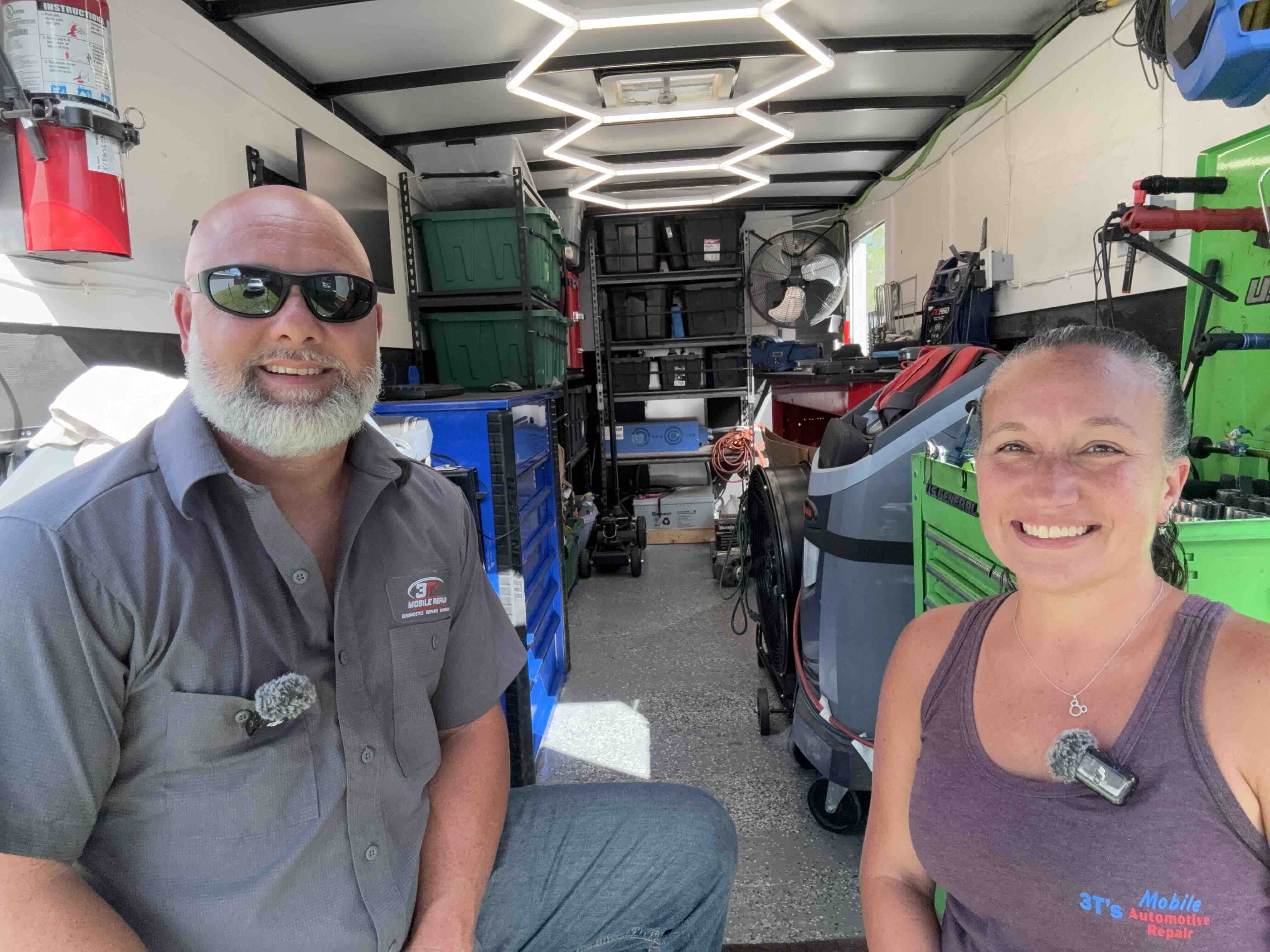
Ben and Jena Dellaria bring the shop to the driveway. Tekmetric gave them the numbers, the speed, and the presentation to compete with every auto repair shop in their market.

Ben Dellaria started 3T's Mobile Automotive Repair with a truck, a trailer, and a pad of paper.

The pad of paper lasted about as long as you would expect.

"My handwriting stunk. I had no way to figure out how to make my pricing for the parts," Ben said. "I still had no idea how to come up with a labor rate or anything like that."

Eventually, he started using a shop management software that was an add-on to another technology product. It only held for a year, and then the cracks showed. Five tabs were open at once. Everything had to be typed by hand. There was no reporting, no customer history, and no way to see what the business was doing.

"There was no way to track what we were doing with the company," Ben said.

He also could not get a straight answer on price from the technology providers he called. One kept him on the phone for an hour without naming a number.

"I said, 'Okay, that's great, but how much does this cost?'" Ben said. "'Oh, we'll get to that.' I said, 'I don't want to get to that. I want to know before I waste your time and mine.'"

In January 2023, he signed up for Tekmetric. And that's when everything began to change for the better.

A Job Board He Could Shape Around a Trailer

Mobile operators do not get to inherit a shop's workflow. Ben needed a platform that bent to his, and the job board in Tekmetric did just that. He could see every repair order at a glance, then rearrange the view to match how he actually worked.

"The job board being very clear-cut and the fact that I can edit it to make it work for me was one of the biggest selling points," Ben said. "It made my job quicker, easier, and I didn't have to get the calculator out to do anything."

Integrations closed the rest of the gap. PartsTech put supplier ordering inside the estimate, so a quoted part becomes an ordered part in one click. Smart Jobs pull vehicle-specific labor times and parts automatically.

Ben timed it for his own community: an estimate built with Smart Jobs takes under 30 seconds. The same estimate built the old way took at least three minutes.

"I hate sitting here for 15 minutes to make an estimate," he said.

The Estimate Lands Before They Leave the Driveway

A 3T's service call runs on a schedule built a full week out. Jena answers every call herself because no two are the same.

"Every single call that comes into us is unique," Ben said.

From there, the platform carries the job. Jena sends a digital authorization for diagnosis before the truck ever rolls, and customers approve it on their phones. On site, she walks the vehicle with a tablet and builds the digital vehicle inspection with photos as she goes. Ben shoots photos from underneath the car and uploads them to the same inspection.

By the time the trailer is packed, the estimate is already in the customer's inbox.

"She's already in the trailer making that estimate and she can send it to the customer before we even leave," Ben said. "They know exactly what we're doing, and then they can just come out to us."

Jena came to the business full-time in August 2025 with no automotive background. Within a year, she was running estimates from start to finish.

Professional Enough to Answer the Question Every Mobile Shop Gets

Customers hesitate before they hand their keys to a truck in their own driveway. Ben knows it. He built his business to answer doubts before anyone voices them.

Every estimate carries the business name, address, logo, and motor vehicle license number. Labor lines are written out and explained. The three-year, 36,000-mile parts and labor warranty is right there, along with every disclosure.

"It shows who we are," Ben said. "All of those disclosures make that customer feel very comfortable that we're not just going to show up as some fly-by-night thing because most people are a little bit nervous with most mobile services."

Reputation followed. 3T's carries a 4.9-star rating across more than 130 reviews, and Ben credits the run he had with automated review requests for getting it moving.

"The automation of being able to send those reviews over to the customers was the best," Ben said. "It made my reviews grow the most."

He does not chase reviews by hand, and he doesn't have to. Customers who get a clear estimate, a photo-backed inspection, and a card reader at their own front door tend to say so on their own. Other shops running the same tools report the same effect.

"The text feature is a huge hit — customers can review inspection results, check estimates, and approve repairs with just a click," one Tekmetric shop wrote in a verified G2 review.

For a customer who never has to leave the house, that is the whole game.

"Giving customers paperwork and having them reference it was the old way," Ben said. "They get everything in an email and they just save that email. They don't stress about that at all."

Fewer Cars. Higher ARO. Better Life.

Ben used to panic when his car count fell below 40 cars a week. He was working five and six days to get there.

"I was thinking, we're not making enough, I need more cars, because I didn't understand parts markup," he said. "I didn't understand where my labor rate should be."

Reporting in Tekmetric changed the math that runs his business. He learned what his ARO actually was, fine-tuned his labor rate and parts matrix, and priced himself competitively against brick-and-mortar shops in the area.

Today, 3T's runs four days a week and 20 to 25 cars, with a higher ARO and a lifetime average repair order of $300 across 2,816 posted repair orders.

Payments came next. Ben moved card processing onto Tekmetric Payments to close repair orders and put financing in front of customers facing a repair they did not plan for.

"Raising the average per RO and raising the close rate on tickets with the option of financing is pretty vital," Ben said. "In today's world, it's getting harder and harder for customers to be able to repair their car properly."

The math backs him up. Across shops using Tekmetric Payments, offering Buy Now, Pay Later lifts average repair orders by at least 13 percent.

Revenue tells the rest. The first year on Tekmetric, he closed at $199,000. The most recent year, he closed at $242,000, the best in 3T's history.

The days got shorter, too. Ben used to come home at 5 p.m. and write estimates until 8 p.m.

"We still save at least two hours a day on average," he said.

Next Stop: $300,000

Ben is not opening a brick-and-mortar shop. He has looked at the math on staffing a five-bay shop and decided the mobile model is the one worth pushing.

"I think in the next five to 10 years we are still going to stay mobile and just see how far I can push the boundary," he said.

The plan to reach $300,000 a year is not more cars. It is tighter inspections and more consistent presentation of recommended work on every repair order.

"I have no doubt in my mind that we will get to that $300,000 a year mark just by strictly doing what we're doing with the cars," Ben said.

He is telling other mobile technicians the same thing he tells himself, through a YouTube channel, a TikTok following, and an online community he built for mobile operators who are tired of being sold a fantasy.

"I don't look at Tekmetric as an expense. I teach my guys that this is a tool. This is just as important as your scanner," Ben said. "Where do you want to be? How far do you want to get your business?"

Frequently Asked Questions

What results has 3T's Mobile Automotive Repair seen since switching to Tekmetric?
3T's grew annual revenue from $199,000 in its first year on Tekmetric to $242,000 in its most recent year, the best in the company's history. The business also saves at least two hours a day on administrative work and holds a 4.9-star rating across more than 130 reviews.

Does Tekmetric work for mobile auto repair businesses?
Yes. 3T's runs Tekmetric from a truck and a trailer. The customizable job board, digital vehicle inspections built on a tablet, digital authorizations, and estimates sent to the customer's phone let a mobile operator run the same workflow a brick-and-mortar shop would, without a front desk.

How does Tekmetric help a mobile shop build customer trust?
Every estimate 3T's sends carries the business name, address, logo, motor vehicle license number, warranty terms, and disclosures. Customers approve work from their phones and keep the full record in their inbox, which addresses the hesitation many people feel about mobile services.

How did 3T's raise its average repair order without adding cars?
Reporting in Tekmetric showed Ben Dellaria his true ARO, labor rate, and parts markup. He adjusted pricing, moved card processing to Tekmetric Payments, and offered financing on larger repairs. Today the business services 20 to 25 cars a week over four days instead of 40 or more cars over five or six.

About 3T's Mobile Automotive Repair

3T's Mobile Automotive Repair is a mobile auto repair business owned and operated by Ben and Jena Dellaria. The team brings diagnostics, maintenance, and repair directly to customers' driveways and backs every job with a three-year, 36,000-mile parts and labor warranty. Ben also runs a YouTube channel, TikTok following, and online community for mobile technicians.

About Tekmetric

Tekmetric is the all-in-one auto repair platform. More than 16,000 shops use Tekmetric to increase revenue, improve efficiency, and deliver better customer experiences through digital vehicle inspections, streamlined workflows, and real-time reporting.

Aniz Lavji has been in business for 20 years, but he'll tell you he's only been running a business for one of them.

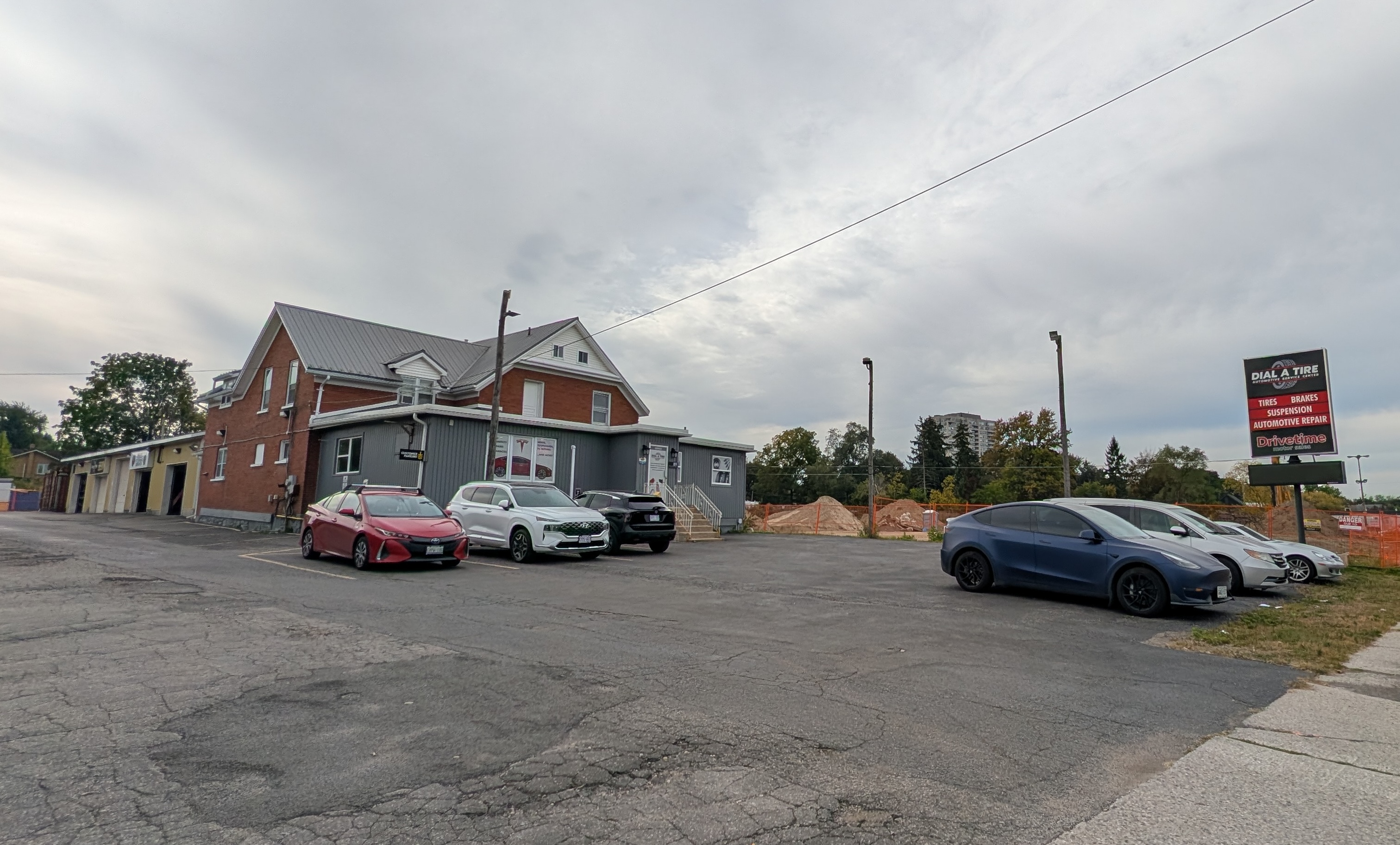
Dial A Tire Automotive Service Center, in Ontario, Canada, started as a used car dealership in 2006. Lavji was studying broadcast journalism at the time and hated it. When his father called about a dealership lease, they signed it within the hour.

The pivot to tires came by accident. Lavji bought a pair of used tires for a customer car, not realizing his dad had already bought new ones. Stuck with $150 worth of rubber, he listed them on Craigslist for $220.

"Nine minutes later, I had somebody drive up with $200 and hand it to me," Lavji said. "That sparked me."

Receipts, Not Repair Orders

For almost two decades, Dial A Tire ran on accounting software that wasn't built for auto repair.

"We were using a software that you can use for selling flower pots," Lavji said. "And that's just what we knew. We didn't know any different."

Every job was one line. For instance, a $450 brake job showed up as exactly that. No labor breakout, no parts detail, and no transparency for the customer. Inspections meant walking a customer into the bay and pointing at a rotor. There were no digital vehicle inspections, no automated texts, and no follow-ups after the car left.

Then, Lavji heard about Tekmetric on a podcast. He ran a demo, decided the platform could transform his business, and went live in June 2025.

Nearly Doubling Revenue

Dial A Tire finished 2024 at roughly $780,000. In 2025, the first partial year on Tekmetric, the shop hit $980,000. Halfway through 2026, Lavji is projecting about $1.7 million in business.

The shop cleared more than $160,000 in April and again in May, running at 59% gross profit.

He added one person to the team to accommodate the influx of work.

"I haven't done anything different. It's still me in the front doing everything when it comes to writing repair orders," Lavji said. "It's not like I can say, 'Oh, I've got eight staff in the garage and that's why we're able to do these kind of numbers.' I don't have any of that."

More Than 1,000 Inspections in the First Month

Digital vehicle inspection photos at Dial A Tire climbed from about 200 to more than 1,000 within the first month on the platform.

The jump came from a decision Lavji made in a staff meeting: stop inspecting like a tire shop.

"Because we're a tire shop, we're just going to look at the tires. We had to expand exactly what we were looking at as if it was our own vehicle," Lavji said. "If our own vehicle is traveling down the road, do we want the tech to just look at the tires? Just look at the brakes? No."

The team built a repeatable inspection covering every critical item, timed to fit a real service visit rather than eat the customer's afternoon. It only takes about 15 minutes.

"Now it's just second nature," Lavji said. "When the car comes in, no one's asking me, 'Should we do an inspection?' It's something that we just do."

That documentation also changed phone calls. When a customer rings up about a noise, Lavji can pull a service record instantly.

"'Oh, well, Dec. 23 at 2:52 p.m. we had sent you this inspection that you actually need front control arms,'" Lavji said. "'Oh, you know what? I remember that. Yeah, you're right.' It's like, 'Hold on a second.' Click. 'Did you just send that to me while I'm on the phone?' 'I did, because I can.' And they're impressed."

Tekmetric Marketing Keeps the Bays Full

The leaps in growth didn't come from a bigger team. They came from reaching every customer more often, automatically.

Lavji points to Tekmetric Marketing as the engine behind the numbers. Lost customer follow-ups pull people back who haven't been in. Automated texts go out six months after an oil change to bring customers in for the next one. Two days after a service, an automated message asks how the vehicle is doing. Two days after that, a review request goes out.

"It's utilizing the features, the lost customer follow-ups in the Tekmetric Marketing system. It's using the text messages after their oil changes," Lavji said. "All these little things that you make use of is just going to bring them back and give you another touch on their vehicle."

The result: dramatically increased positive reviews. Dial A Tire sits at 705 Google reviews and a 4.7 rating.

"How much would you pay someone to write 15 to 20 five-star reviews from 20 different accounts on Google? You'd probably write a check," Lavji said. "You don't have to. Your customers are going to be so happy that they are going to be more than happy to respond."

Online bookings also have exploded.

"All of a sudden, online booking went nuts, which has been insane," Lavji said.

The shop is now booking a week out with 40 to 50 hours on the board before the week even starts.

A Level of Communication the Industry Needed

Texting has changed how customers relate to the shop. They aren't waiting for a surprise phone call anymore. They get the inspection first, then the conversation.

"They have that sense of family when they're actually sending us a message," Lavji said. "They know that it's going to get taken care of. They know that we're on top of it, and they're getting these updates instead of a random phone call."

Lavji said the extra layer of communication is a boost for the business.

"They're telling their spouse, 'Yeah, I'm just going to send a quick message to Aniz and he's going to get it all figured out,'" Lavji said. "It's just a level of communication that you're able to have with a customer that this is something the industry's needed for a long time."

Onboarding: One Long Night, Then One Month

Lavji didn't ease into Tekmetric. He jumped head first.

He logged into the sandbox on a Sunday and stayed up until 4 a.m. the next morning building work orders and watching every training video on the site, including the technician ones.

"I needed to make sure that I had a very good idea on how to do most of the things," Lavji said.

His team was fully comfortable with the platform in about a month. Coaching and the built-in training library did the rest.

"The transition even for new employees that are coming on board, your how-to and your videos that you have on the actual site, those are really, really good and made very tasteful," Lavji said. "It doesn't get boring."

Running the Shop From Anywhere

Cloud access has taken Lavji out of the building without taking him out of the business. He's written work orders from a vacation in Cancun and managed the shop from a training conference in North Carolina three months after going live.

"During my breaks in class in North Carolina, I'd have my laptop there, log in, and I was able to communicate with my customers, send off work orders, and everything was just flowing," Lavji said. "I was able to take control of my business from another country."

He also gets home earlier. Lavji used to fight his way out of the shop by 6 p.m. He leaves by 4 p.m. now.

"Before, I had to make all these receipts, have everything ready," Lavji said. "But now I've got open work orders, and everything's done. So, even if I'm not here, my techs can close them out, they can take the payments, and do everything."

A Team Built on Giving People a Chance

Dial A Tire runs with four people: two licensed technicians, one service advisor who was a recent hire, one apprentice, and one tire tech. The business is looking for another tire tech.

"I think there should be more women in the trades," Lavji said. "Whether you're a man or a woman, you can be a shop owner, you can work in the shop, you can turn wrenches. It doesn't matter. But they have to be given the chance to do it. And that's one change that I want to make sure I'm part of."

What He Tells Other Shop Owners

Lavji has become an unofficial Tekmetric recruiter at industry events, and he doesn't spend much time on the cost question.

"If it has to do with the price you're going to pay, $400 or $500 a month is nothing because when you get the software, your labor rate will go up," Lavji said. "You're not even going to realize that you're spending that because you're making 10-to-20 times that."

He's equally direct about effort. Software doesn't run a shop. Owners do.

"It's only going to be as good as what you put in. If you put in 10%, you're only going to get 10%," Lavji said. "But if you're all in, you do the work, do the training, ask questions, talk to industry experts, that's the only way that you're going to understand the full potential."

What sold him on Tekmetric wasn't a feature list. It was watching a company respond when shop owners asked for something, including Tekmetric CEO Sunil Patel answering directly in the Tekmetric User Group, TUG.

"Where do you get a company where the CEO is actually going in there and responding? It doesn't happen," Lavji said. "Being able to work with a company that's actually listening to what we need and what we want is second to none."

And when Lavji is asked what he'd say to an owner still deciding, the answer is short.

"I've been in business for 20 years. I've only started running my business since I got the software," Lavji said. "My only advice to others is you should have done this sooner."

Frequently Asked Questions

How much did Dial A Tire's revenue grow after switching to Tekmetric?
Dial A Tire finished 2024 at roughly $780,000. In 2025, its first partial year on Tekmetric, the shop hit $980,000. Halfway through 2026, owner Aniz Lavji is projecting about $1.7 million, with one new hire added to the team.

How did Dial A Tire increase digital vehicle inspections?
The team stopped inspecting like a tire shop and built a repeatable inspection covering every critical item in about 15 minutes. Digital vehicle inspection photos climbed from about 200 to more than 1,000 within the first month on Tekmetric.

How does Tekmetric Marketing bring customers back to the shop?
Lost customer follow-ups reach people who haven't been in. Automated texts go out six months after an oil change, two days after a service to check on the vehicle, and two days after that to request a review. Dial A Tire now sits at 705 Google reviews with a 4.7 rating and books a week out with 40 to 50 hours on the board.

About Dial A Tire

Dial A Tire is a tire and automotive service shop in Ontario, Canada, founded by Aniz Lavji and his parents. What began as a used car dealership in 2006 is now a five-bay shop serving its community with tires, mechanical repair, and seasonal tire storage. Dial A Tire uses Tekmetric to manage repair orders, digital vehicle inspections, customer communication, and marketing.

About Tekmetric

Tekmetric is the all-in-one auto repair platform built for the shops that keep people moving. More than 16,000 shops use Tekmetric to make more money, repair more cars, run more efficiently, and deliver a better customer experience through digital vehicle inspections, integrated payments, marketing automation, and real-time reporting. Learn more at tekmetric.com.

The multi-shop operator brought 16 shops onto one standardized system in nine months and cut estimate build time from about 15 minutes to about four

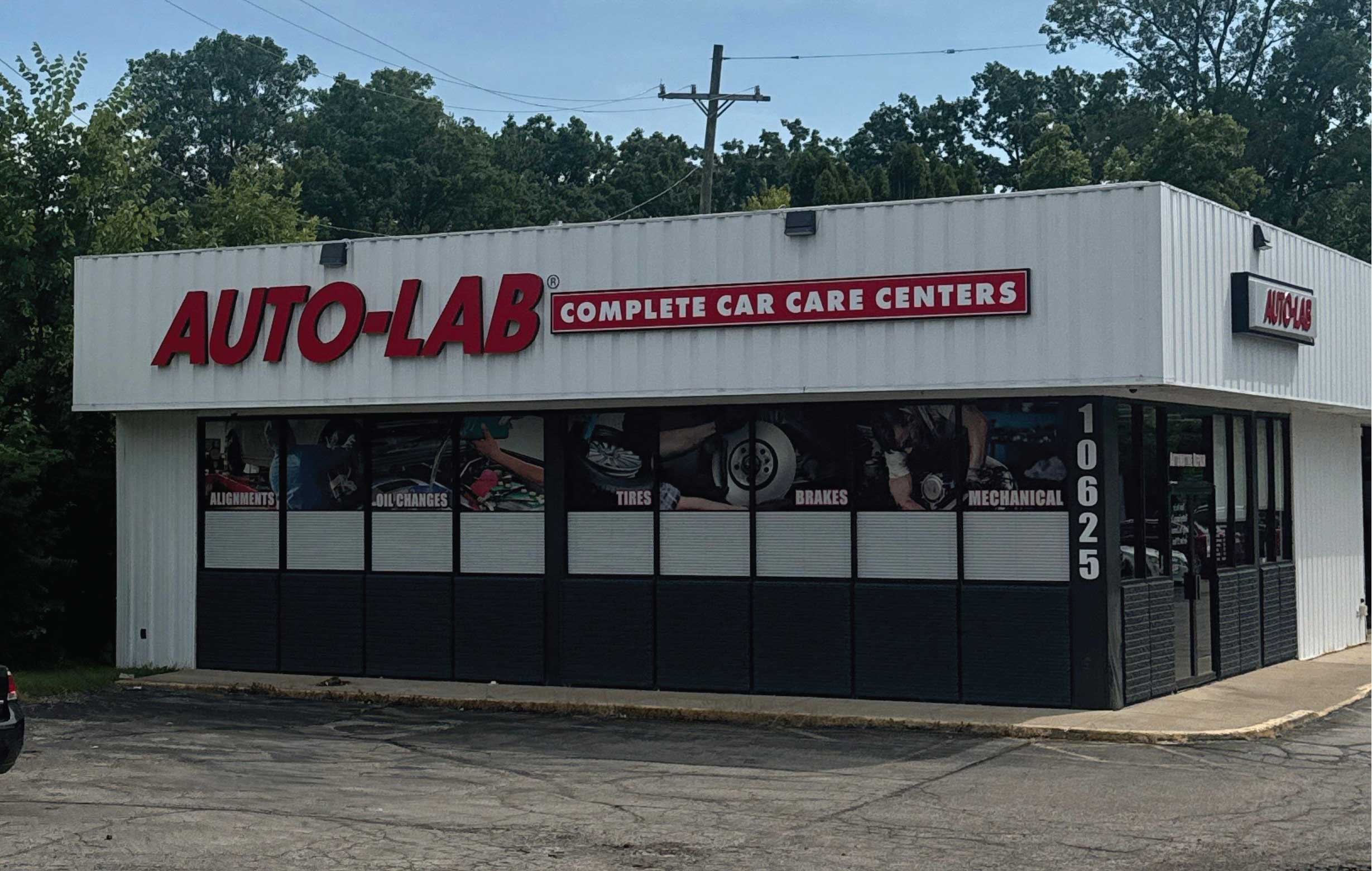
Mark Sullivan didn't set out to run multiple auto repair shops. He set out to fix cars the right way, at one location in Plymouth, Michigan. But as Auto-Lab's COO, Sullivan has spent the past year proving that growth and consistency don't have to be at odds, as long as the technology behind every shop works the same way, every time.

Auto-Lab migrated to Tekmetric a year ago, moving away from an aging, limited system. Since then, the company has scaled from two active Tekmetric locations to 16 in nine months, with additional shops preparing to come online as the brand continues to expand.

"Tekmetric has made things so much easier, not only at the store level, but even the reporting stuff with the multi-shop has helped tremendously," Sullivan said.

Starting with a Fragmented System

Before Tekmetric, Auto-Lab ran on a system Sullivan describes as feature-heavy but inconsistent.

"It had a lot of features, but none of them were great," Sullivan said.

Marketing tracking was unreliable. Integrations broke. Advisors pieced together workflows shop by shop with no easy way to compare performance or spot which locations needed help.

"A lot of times we put an integration in there and there's all kinds of bugs," Sullivan said. "Now we deal with a company that ties right into the back end of our point of sale, and we get our ROI down to the penny. We know it's accurate."

Standardization Built for Scale

Every time Auto-Lab opens a new location, the setup is already done. Canned jobs, labor rates, and DVI workflows are in place before the doors open.

"I walk in there, I turn the computer on, and all my canned jobs are already there," Sullivan said. "All I've got to do is plug the credit card machine in, and we're ready to do business."

That consistency extends to training. Rather than building a new inspection process at every shop, Sullivan's team teaches the same standardized workflow everywhere.

"We're not coming up with a new one every time," Sullivan said. "It just made the learning curve shorter, and it makes us look more professional and a lot faster than the old way."

Sullivan's goal is for every customer to have the same experience at any Auto-Lab location, no matter the state.

"I want the McDonald's experience," Sullivan said. "I don't care where you go in the country. I know what to expect and how the whole situation is going to go. When I'm dealing with one of the most expensive things I own, I want to feel comfortable. I want transparency. With Tekmetric, it allows us to do that in a repeatable way."

Store-by-Store Accountability

Tekmetric Multi-Shop reporting changed how quickly Sullivan could act. Instead of building spreadsheets from store-by-store profit and loss statements, he can now pull real-time data on digital vehicle inspections (DVIs) and gross profit per store and directly support the shops that need help.

"It just makes the whole system a lot easier and a lot simpler to navigate," Sullivan said. "You can pivot and help stores way quicker than we could in the past."

That side-by-side view of every location's performance replaced what used to be a manual spreadsheet exercise.

"Now I can simply go into the multi-shop, print it out, and have a store-to-store comparison," Sullivan said. "It's not me coming to them saying, 'Hey, you need to do this.' It's, 'These guys are doing this proven system, so which result do you want?'"

That visibility also surfaces gaps that would have gone unnoticed before, including service advisors who weren't presenting full estimates to customers, and by extension, weren't feeding those declined jobs into automated reminders.

"You can hold your staff accountable," Sullivan said. "Before, there was no easy way to track that stuff."

The same transparency helped Auto-Lab catch billing inconsistencies across a few locations, an issue Sullivan said would have gone undetected under the old system.

"If it wasn't on the multi-shop, I would never even know," Sullivan said. "The value-add on the franchisee's end, and us being able to see what's going on, is very important."

Faster Estimates, Lighter Workload

The shift to Tekmetric changed how long it takes advisors to build an estimate, cutting the process from about 15 minutes to about four.

"Now I can just click one button from the technician's checkout, and it builds the whole ticket," Sullivan said. "So now in four minutes, I'm texting it to the customer and moving on to the rest of the things I've got going on."

Sullivan estimates the time savings functions like adding another team member at every location, freeing advisors to focus on customer follow-up instead of paperwork.

"It's almost like adding another employee," Sullivan said.

Transparency That Builds Trust and Reviews

Tekmetric Payments met early resistance from Auto-Lab's team. A year later, Sullivan said that resistance evaporated.

"A year later, they're like, 'I don't even know how we dealt with not having this,'" Sullivan said. "The guys can pay from their phone. We can text them right through the software. It makes the customer experience better."

That transparency, paired with DVIs, has translated directly into online reputation. Auto-Lab's Google reviews have climbed from roughly one five-star review a month under the old system to eight to 10 per month today.

"Before, they were almost nonexistent," Sullivan said. "Now, our Google reviews are through the roof."

Sullivan credits the simplicity of the review request process, not just the technology, for the shift.

"It takes them about 30 seconds," Sullivan said. "That piece alone pays for the customer retention piece of the software."

For declined service follow-up, Sullivan's team layers in a personal touch rather than leaning only on automation.

"I have my advisors actually message customers directly," Sullivan said.

Room to Grow

Sullivan estimates Auto-Lab is using about half of what Tekmetric offers today, and he's not slowing down.

"At 50%, I'm over the moon happy with the results," Sullivan said. "We're just scratching the surface on what we can do."

Auto-Lab's average repair order has already climbed since adopting Tekmetric, and Sullivan is targeting the Michigan state average of around $700. If you're curious how your shop stacks up, benchmark your performance against thousands of shops nationwide with the free Tekmetric Shop Index.

"Now we have a benchmark to hit," Sullivan said. "The information I get from Tekmetric on industry standards gives me a road map to get to where everybody else is. I'm not just making up numbers."

Looking Ahead

Auto-Lab is on track to double in size over the next three years, and Sullivan sees every new location as a chance to launch at full strength from day one.

"With new stores, you don't have to deal with legacy habits," Sullivan said. "We're coming in with a fresh new software, a fresh new look, and a whole different set of rules on how we run shops."

For other multi-shop operators evaluating a switch, Sullivan's advice centers on standardization.

"All the successful shops I know use Tekmetric," he said. "That affirms for me that this is best practice. I don't need to reinvent the wheel."

Frequently Asked Questions

What results has Auto-Lab seen since switching to Tekmetric?
Auto-Lab brought 16 shops onto Tekmetric in nine months, cut estimate build time from about 15 minutes to about four, and grew its monthly five-star Google reviews from roughly one to eight to 10. Its average repair order has climbed since adoption, and the company is targeting the Michigan state average of around $700.

How does Tekmetric help multi-shop operators open new locations faster?
Canned jobs, labor rates, and digital vehicle inspection workflows are configured before a new shop opens, so the location launches on the same standardized setup as every other store. Auto-Lab's team also teaches one inspection workflow across all locations rather than building a new process at each shop.

How does Tekmetric Multi-Shop reporting support accountability across locations?
Multi-Shop reporting gives operators a real-time, store-to-store comparison of digital vehicle inspection completion and gross profit, replacing manual spreadsheets built from individual profit and loss statements. Auto-Lab used that visibility to identify service advisors who weren't presenting full estimates and to catch billing inconsistencies across locations.

How did Auto-Lab increase its Google reviews?
Auto-Lab pairs digital vehicle inspections with Tekmetric's review request process, which takes a customer about 30 seconds to complete. Monthly five-star reviews grew from roughly one under the shop's previous system to eight to 10 today.

About Auto-Lab

Auto-Lab is a multi-shop auto repair operator with 16 locations across Michigan, Indiana, Connecticut, and Florida, and continues to grow its footprint. Auto-Lab uses Tekmetric to standardize operations, strengthen customer trust, and scale its brand experience across every location.

About Tekmetric

Tekmetric is the all-in-one auto repair platform. About 16,000 shops use Tekmetric to increase revenue, improve efficiency, and deliver better customer experiences through digital vehicle inspections, streamlined workflows, and real-time reporting. Learn more at tekmetric.com.