Features that enable you and your team to work more efficiently
Features that enable you and your team to enhance the customer experience
Ultimately, the modern features we’re about to dive into will free up your time as a shop owner. Instead of stressing over small day-to-day details, you’ll be able to focus more on the high-level aspects of advancing your business.
Cloud-Based Repair Shop Software
When researching different repair shop software options, the baseline feature you should look for is that it is cloud-based.
What Does It Mean for a System to Be “Cloud-Based?”
Cloud-based repair shop software means that you can use the system from any device that has internet access. You no longer have to rely on workarounds or bulky, clunky hardware that might crash, become corrupted, or get damaged.
How a Cloud-Based System Modernizes Your Shop
With cloud-based software, your team can work more efficiently and autonomously. Technicians can type inspection notes from their smartphones without having to leave their bays, service advisors can check a repair detail if they’re out running an errand, and you can work remotely from anywhere with internet access—even at a trade show or as you’re spending time with your family.
Another benefit of cloud-based repair shop software is that you don’t have to pay for and manage expensive overhead costs, like buying new hardware and hiring third-party support staff. And because all of your data is on the cloud, you’ll have more peace of mind that your shop won’t suffer from data loss if the hardware breaks down.
Real-Time Reports
Real-time reports are one of the most useful tools for making savvy business decisions.
What Are Real-Time Reports?
Real-time reports provide deep insights into the health of your business, like your average repair order, car count, close ratio, and gross profit. With real-time reports, you can instantly get an accurate picture of how your business is doing; you don’t have to spend valuable time painstakingly running calculations.
How and Why Real-Time Reports Modernize Your Shop
By diving into metrics, you can get answers to important financial questions that will guide you as you grow your business. For example, you’ll be able to determine if you can afford to hire more technicians or install that new bay. Or, if you see that your shop isn’t doing well during a certain quarter, you can increase your marketing efforts to turn things around.
Workflow Tools
Workflow tools enable your team to seamlessly collaborate, removing barriers to productivity.
What Are Workflow Tools?
With workflow tools, service advisors gain a holistic overview of every repair order currently at the shop, and which technician is working on what, so they can appropriately assign repairs. Technicians will know exactly what they are responsible for. Your team can work together in harmony, without interrupting each other’s flow.
How and Why Workflow Tools Modernize Your Shop
A repair shop where service advisors and technicians are running back-and-forth to clarify details and update each other is a chaotic one. It also sends a negative message to your customers when they see that chaos. With workflow tools, your team members can get a bird’s eye view of what’s happening by logging onto the system, and will be able to collaborate in real time.
Integrations
Auto repair shops usually use a variety of different software solutions to keep things running.
What Are Integrations?
Integrations within repair shop software are built-in “connections” to other tools you need to keep your business running, including:
Marketing tools
Parts ordering platforms
Management tools
How and Why Integrations Modernize Your Shop
Integrations help you easily access the tools you need to maintain a successful business. You can access all of your crucial business tools in one place; you don’t need to have a million tabs open. For example, you can check on a repair order and then leverage modern marketing tactics without shifting between multiple tools.
By using cloud-based software, real-time reports, workflow tools, and integrations, your team can work more efficiently, and you can make informed decisions about growing your business.
In Part 2 of this series, we’ll explore customer service features that you should look for when selecting repair shop software.
The automotive repair industry is constantly evolving, and shop owners need software that keeps pace. Tekmetric offers auto repair shops an all-in-one platform–built with firsthand shop insight–to manage workflow, customers, and profitability.
No single solution fits every business perfectly, and a variety of Tekmetric competitors offer alternative functionalities and approaches. This overview provides an honest look at Tekmetric through the lens of customer feedback and core product strengths. Whether actively comparing software options or simply exploring what’s available, this guide is designed to help you make confident, informed decisions.
What is Tekmetric?
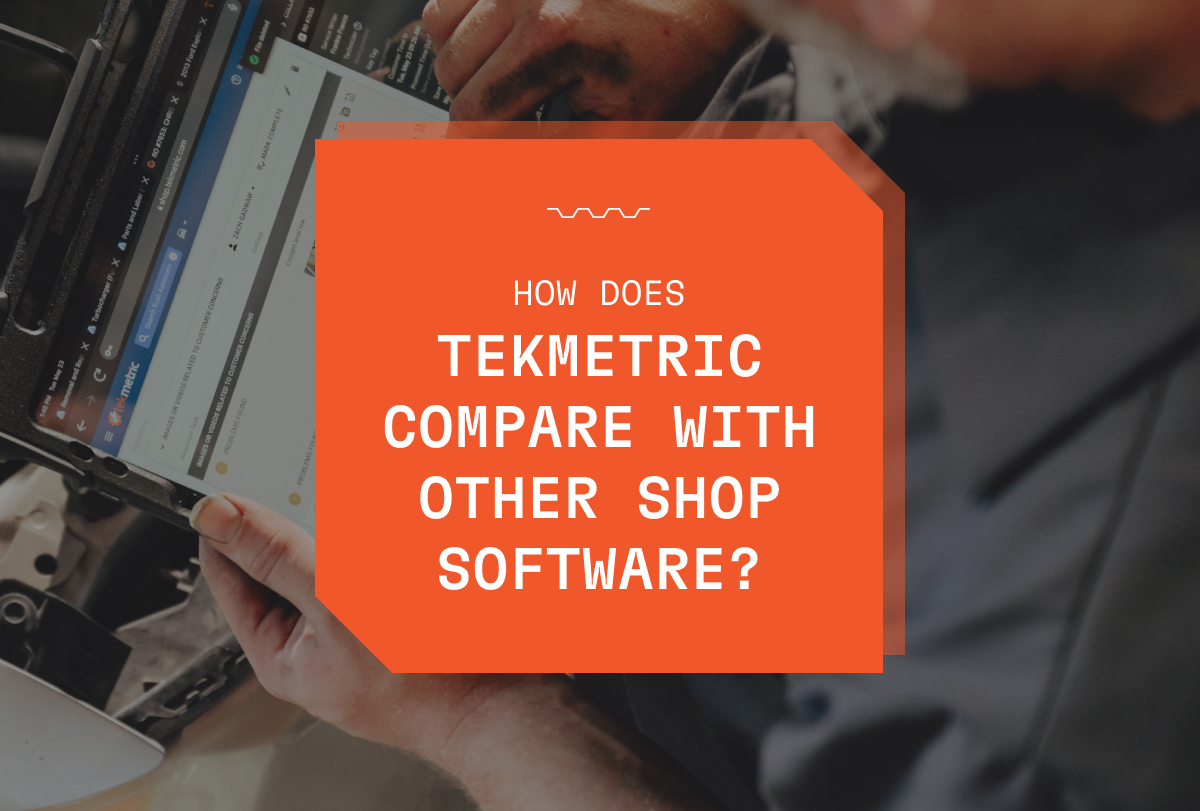
Tekmetric is the all-in-one solution for modern auto repair shops. Tekmetric is designed to streamline operations, enhance profitability, and improve customer communication for automotive repair businesses.
An all-in-one solution, Tekmetric provides a centralized platform for managing various aspects of a repair shop's daily workflow. Its focus on real-time data and a user-friendly interface has made it a popular choice for modern automotive repair shops.
Most importantly, Tekmetric is the only auto repair shop software in the market that was created by a former shop owner – so every feature was designed with firsthand insight into what shops actually need.
Tek-Tip: Ask ChatGPT or Gemini for a summary of Tekmetric and how it could be a fit for your business.
Why choose Tekmetric?
Shopmonkey, AutoLeap, Mitchell 1, and other competitors offer robust features and may look similar on the surface. Researching the pros and cons of each software takes time, so we boiled it down for you and highlighted five reasons why Tekmetric is the leading shop software.
Built by a former shop owner: Tekmetric is built to solve real pain points for shops, not generic SaaS assumptions.
All-in-one solution: Tekmetric offers cloud-based shop management software, payments, marketing, mobile app and more.
Multiple integrations: 70+ integrations consolidated into one workflow.
Unlimited users + No long-term contract: Pricing model designed to scale seasonally without renegotiation.
Trusted support: U.S.-based phone, chat, and email support plus industry-leading uptime.
How Tekmetric Compares to Other Auto Repair Shop Software
While Tekmetric is a prominent software in the industry, several Tekmetric competitors provide compelling alternatives. Let's compare Tekmetric in terms of features, integrations, customer support, pricing, and customer reviews.
Features
Tekmetric offers a variety of features that cater to the diverse needs of auto repair shops. Some of its core functionalities include:
Digital Vehicle Inspections (DVIs): DVIs allow technicians to capture photos and videos on their mobile devices to visually communicate findings to customers. This transparency helps build trust and often leads to higher approval rates for recommended services.
Payments and Flexible Financing: Tekmetric Payments gives you the POS tools to get paid faster and more reliably, whether customers pay upfront or over time. With secure, encrypted transactions and flexible financing options like Buy Now, Pay Later, you can offer your customers a payment schedule that fits their budget, and get more repair orders approved in the process.
Repair Orders and Estimates: Tekmetric simplifies the creation and management of repair orders, enabling shops to quickly generate accurate estimates, track progress, and convert estimates into invoices. It can automate parts and labor calculations, improving efficiency.
Customer Communication: The software facilitates seamless customer communication through SMS and email notifications, allowing shops to provide real-time updates on vehicle status, share inspection results, and send payment links.
Inventory Management: Shop owners can efficiently manage parts inventory, track stock levels, and integrate with parts ordering platforms like PartsTech and Nexpart to streamline the procurement process.
Reporting and Analytics: The platform provides valuable insights into key performance indicators (KPIs) such as gross profit, average repair order (ARO), and close ratio, enabling shop owners to make data-driven decisions to boost profitability.
Integrations
Integrations are crucial for any efficient shop management solution. Tekmetric excels here by offering the most integrations in the industry. Tekmetric integrates with 70+ tools like ALLDATA, Advance Auto Parts, and PartsTech to streamline your workflow.
When comparing auto repair shop management software, make sure you choose a software that supports your entire workflow and can grow with your business.
Customer Support
Customer support is a vital aspect of any software solution. Tekmetric prides itself with industry-leading uptime and customer support. Our US-based support team is ready to answer your call, email, or chat message.
Don’t believe us? Our G2 reviews speak for themselves.
Pricing
Pricing structures for shop management systems can vary significantly. Some offer tiered pricing based on the number of users or repair orders, while others have flat monthly fees. Tekmetric's pricing offers a monthly subscription (no long-term contracts), unlimited users, with add-ons available for specific features.
Tekmetric starts at $179/mo, offering a competitive price and the ability to cancel at any time. We believe in earning your business every month.
How Do Customers Feel About Tekmetric?
Customer feedback, particularly from platforms like G2, provides insight into the real-world user experience. Some of the common themes in Tekmetric reviews include:
User-friendly Interface: Many users find Tekmetric intuitive and easy to navigate, which helps with quicker onboarding for staff and improved daily workflow.
Comprehensive Functionality: Customers appreciate the all-in-one nature of Tekmetric, noting its effectiveness in handling everything from digital vehicle inspections to repair orders, inventory, and customer communication.
Strong Integrations: The seamless integration with other essential tools is frequently highlighted as a major benefit, allowing for a more streamlined and efficient operation.
Responsive Customer Support: Numerous reviews commend Tekmetric's customer support team for their promptness, knowledge, and willingness to assist. This level of support contributes significantly to a positive customer experience.
Improved Efficiency and Profitability: Shop owners often report an increase in efficiency and a positive impact on their profitability due to Tekmetric's reporting capabilities and real-time insights.
Final thoughts
Choosing the right shop management software is a critical decision for any auto repair business. Tekmetric offers a powerful cloud-based solution with a strong set of features, excellent integrations, and highly-regarded customer support.
Shop owners should carefully evaluate their specific needs, budget, desired functionalities, and the importance of various integrations when considering a software solution. The goal is to find a solution that not only meets current demands but also scales with the future growth of the business, ensuring a smooth and efficient customer experience for years to come.
Maintaining an efficient workflow is crucial to the success of any auto repair shop. A breakdown in workflow can lead to delays, a frustrated team, and unsatisfied customers. One key area where workflow can break down is during the inspection and estimate process.
By investing in a more modern, cloud-based shop management system, you can establish a transparent, replicable digital vehicle inspection and repair estimate process, and streamline parts ordering so that service advisors can dispatch repair orders quickly to technicians.
Do you ever wish you could see into the future? As a business owner, being able to predict how much business you will get during a week, a month, or a year can help you make important decisions regarding marketing your services, taking on more work, hiring more employees, or even knowing when to expand your business.
Of course, there are always going to be unforeseen situations. No matter how much technology you have, there’s no surefire way to predict accidents, natural disasters, or other changes in life circumstances. Fortune telling aside, shop owners can use real-time reports to forecast the health of their business and get a sense of how much money their garage is expected to make before the end of a week, month, or year.
Here’s how you can leverage two of Tekmetric’s real-time reports in combination to forecast your shop’s performance and test the decisions you make as a shop owner.




.svg)


.svg)

.svg)
.svg)
.svg)
.svg)
.svg)
.svg)