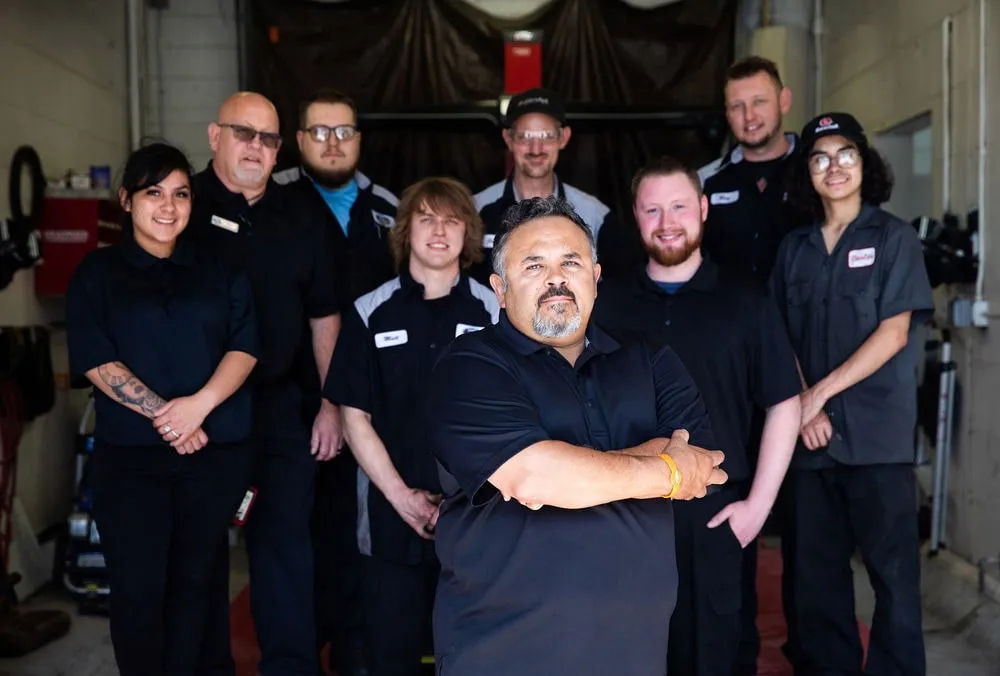
Similarly, your automotive service advisors might enjoy talking to people but feel worn down after a long day of helping customers and building repair orders.
We've talked before about how modern shop management systems make it easier for your team to communicate, collaborate, and get things done.
Going a step further, there's an opportunity for shop owners or general managers to help create a culture within your repair shop that not only boosts productivity and maximizes efficiency, but rewards success and contribution as well!
What is Gamification for Auto Repair Shops?
You've probably heard it before: competition breeds innovation. And even in your shop, friendly competition can be a positive way to encourage productivity while keeping things engaging for your team.
Gamification is the process of using game-like mechanics and goal-setting for your employees in a way that encourages and supports productivity and high performance. A really basic example could be a "level-up" system in which workers are awarded different for completing tasks, which could lead to rewards outside of standard benefits.
According to the Gamification and Work study conducted by TalentLMS, employees say gamification makes them feel more productive (89%) and happier (88%) at work.
Here are six ways to gamify your auto repair shop’s workflow to incentivize your team and provide growth opportunities!
1. Track Shop Productivity with the Right Metrics
It helps to have a clear picture of your technicians’ current productivity levels so you can pinpoint which areas of their workflows might benefit from gamification.
For instance, if you notice that your technicians could be more thorough when conducting inspections, you might decide to create a game around seeing which technician can score the highest number of findings every day.
Similar to tracking your technician’s productivity, you can use real-time reports to track metrics that are unique to service advisors, such as the number of estimates written and Average Written Repair Order (AWRO).
From there, you can decide on gamification strategies for your service advisors that help them improve their performance while maintaining their independence.
Shops could set up a challenge where the service writer who builds the most number of estimates that month wins a reward, such as an extra day off or a gift card to a nice restaurant.
2. Create Shop-Wide Challenges
Shop-wide challenges are a great way to boost business for your shop, especially if you find that your shop has been going through a slower period.
Encouraging employees to collaborate on a shared goal can help drive productivity. It would make sense to think about creating shop-wide challenges that focus less on competing at an individual level, and more on working as a team to achieve a common goal.
Or if you do want that friendly competition, it's also possible to think about creating teams within teams, for example maybe pairing service advisors and technicians together and hosting a friendly leaderboard to see which team meets or excels at different metrics.
3. Implement Rewards and Badges
What good would challenges be without rewards? After all, that’s the basis of why gamification works! When we feel like we’re working towards a goal with a tangible outcome, those goals continue to motivate us to keep pushing and growing.
If you can track metrics like car counts or inspections, you can offer different rewards to technicians who complete certain thresholds of work on a daily, weekly, or monthly basis.
The same goes for service advisors; you can track ARO and create badges that incentivize them to close larger repair orders. These badges could take various forms, such as the shape of literal badges or ribbons that team members can pin onto their work uniforms to showcase their achievements.
You should also consider offering bigger rewards. For instance, at the end of every month, you can do something special and reward the highest performers with gift certificates or take them to their favorite restaurant.
It's important for auto repair shops, just like any other business, to create a supportive culture to not only attract but retain the best talent possible! Growing and supporting your team is not only cheaper in the long run, but a much more effective way of ensuring they deliver the best results.
4. Help Your Team Level Up
You can help your automotive service advisors and technicians achieve their goals by encouraging them to always learn new skills.
While continuous learning and education might seem like a baseline expectation for your team, it can be easy for longtime employees to get stuck in a routine and not make the time to learn about new tools, tricks, and technology.
Fortunately, you can help your team get back in the habit of learning by making a friendly game out of it! For example, you can reward the employee who attends the highest number of free online industry webinars in a quarter by giving them an award, like a gift card.
Employees who feel like they have a path forward and the opportunity to grow their careers will be more motivated to take on those responsibilities.
5. Celebrate Success
Rewards are great, but so are team-wide celebrations. Celebrations give your team members a way to relish in their accomplishments together and have fun while doing so.
Consider what shop owner Al Oramas of Pro Auto Care does:
“I celebrate different ‘wins’ with my employees. For example, I wanted my technicians to get ASA certified. Some were sitting on the fence. So I said that getting the certification would lead to a promotion. When one of my technicians passed his two tests, we threw him a party with cupcakes and balloons. It was a good time.”
As your team reaches certain milestones, you can throw them a party, take them on a retreat out of town, or organize a nice team dinner. When your team members can bond outside of work, they’ll come back to the shop refreshed, ready to communicate and collaborate to tackle what’s next.
Simplify Team Gamification With Tekmetric
Tekmetric’s real-time reports can help you decide the best challenges and rewards to use to incentivize your team. From there, you can continue to measure results as you take your shop to new heights!
Automotive repair manuals are packed with detailed instructions. Instead of grappling with trial and error, technicians can follow step-by-step guides. This boosts confidence and reduces repair times. These manuals aren't just about fixing problems. They provide insights into preventive maintenance, helping technicians keep vehicles in tip-top shape. More uptime for a vehicle means happier clients and fewer surprise breakdowns.
Key Benefits of Auto Repair Manuals
Detailed Instructions: Clear, step-by-step procedures make repairs efficient and straightforward.
Accurate Information: Ensures that the latest techniques and specifications are being used.
Preventive Maintenance Tips: Helps keep vehicles in better shape for longer.
Enhanced Learning For New Techs: Fast-tracks new mechanics by providing valuable knowledge.
Good manuals go beyond just the basics. They often include diagrams, diagnostic trouble codes, and even tips from experienced technicians. This can be a game-changer, especially for those rare, hard-to-solve problems.
Quality manuals foster consistency. Regardless of which technician picks up the job, the repair approach remains standardized. This is essential for shops that aim to maintain a reputation for reliability.
In summary, investing time in finding and using quality car repair manuals is a no-brainer for any technician aiming for efficiency, accuracy, and safety in their work.
The Best Car Repair Manuals
1. Factory Service Manuals (FSM): The Gold Standard
When it comes to automotive repair, Factory Service Manuals (FSM) are considered the best in the market. These manuals come directly from the car manufacturer, providing the most accurate and detailed information available. FSMs are the backbone of any serious technician's toolkit. Their reliability and depth make them indispensable, ensuring that every nut and bolt is turned precisely according to manufacturer guidelines.
Pros
Accuracy: FSMs offer the exact specs and procedures recommended by the manufacturer. It's as close as you can get to OEM (Original Equipment Manufacturer) specifications.
Detail: These manuals feature in-depth diagrams, step-by-step procedures, and comprehensive troubleshooting instructions. They cover everything from basic maintenance to complex repairs.
Comprehensive Coverage: FSMs cover all models and variations of a particular vehicle. Whether you're dealing with a base model or a fully loaded version, the FSM has you covered.
Updates and Revisions: Manufacturers often update FSMs to include fixes for common issues, recall information, and software updates. You get the latest and greatest info.
Online Options: Manufacturer websites, auto forums, and E-commerce platforms often offer these manuals in digital format.
Cons
Cost: Depending on the manufacturer, these manuals can be more expensive than other options.
Learning Curve: Factory Service Manuals are written to professionals and do not offer as much explanation as other manuals.
Access: Online versions might require proprietary software or access through specific portals.
2. Chilton Repair Manuals: Accessible and Beginner-Friendly
Chilton auto repair manuals have earned a reputation for being highly accessible and easy-to-use, making them a favorite among DIY enthusiasts. These manuals provide detailed information that is crucial for diagnosing and repairing a wide range of vehicles. They also provide maintenance schedules to keep your cars on the road longer.
Pros
User-Friendly: Unlike Factory Service Manuals, Chilton uses clear and easy-to-understand language making even complex repairs easier to understand and execute.
Detailed Diagrams and Illustrations: Visual aids enhance comprehension, providing clarity on intricate parts and procedures.
Troubleshooting Sections: Identify problems quickly with systematic guidance to diagnose and fix common issues.
Layout: Chilton manuals are organized in a way that makes finding information quick and painless. Indexes and tabulated sections ensure that users can quickly navigate through the content without unnecessary hassle.
Online Options: Chilton auto repair manuals can now be accessed online, providing additional convenience for tech-savvy technicians and DIYers. Benefits include instant access, search functionality and regular updates.
Cost: Some libraries and websites feature these manuals for free making them a more budget-friendly option for DIY enthusiasts and small auto shops.
Cons
Generic Content: While comprehensive, Chilton manuals may not be as detailed as Factory Service Manuals, especially for complex repairs. Chilton tries to cover a range of models, which can sometimes lead to less specific guidance.
Visuals: Chilton can be stingy on visuals and may not be best for those technicians who prefer diagrams and graphics.
Complex Repairs: May lack the depth needed for very advanced or intricate repairs that professional mechanics might require.
New Models: May not always cover the very latest models immediately after they are released.
3. Haynes Repair Manuals: DIY Friendly Guides
Haynes auto repair manuals have been a go-to for DIY enthusiasts because they use easy-to-understand language and more visuals than other options. These guides excel in breaking down complex automotive tasks into simple, easy-to-follow steps. Each manual is backed by hands-on reviews, ensuring the steps and procedures actually work. This reliability adds a layer of trust, making these guides a dependable companion for any repair task.
Pros
Visuals: Haynes repair manuals offer more photos and illustrations than Chilton.
Comprehensive Coverage: Haynes auto repair manuals cover everything from maintenance and troubleshooting to engine and transmission repair. However, they do not offer as much depth as Factory Service Manuals.
Tips and Tricks: Cost and time saving tips from experts are included in Haynes manuals to speed up any repair project.
User-Friendly: Written in plain English withlarge text, headings and lie-flat design make this manual easy to read even with greasy hands.
Digital Options: Online versions are available and feature search functionality, zoomable images and bookmarks. Haynes is typically cheaper than Factory Service Manuals.
Cons
Shallow Content: While Haynes offers comprehensive coverage, more experienced mechanics prefer Factory Service Manuals for more specific guidance.
Coverage for New Models: May not immediately cover the latest vehicle models or recent changes in technology.
Specialized Repairs: Might not cover specialized or unique repairs that are specific to certain models or configurations.
4. AllDATAdiy: Online Subscription for Advanced Users
ALLDATAdiy repair manuals offer original factory repair information that professionals use, including maintenance schedules, diagrams, and repair procedures. However, they only offer an online subscription-based model with no print options. These manuals are typically preferred by professional technicians and have a larger learning curve for DIY enthusiasts.
Pros
Factory-direct: Information is straight from the factory and has not been edited.
Updates: Regular updates cover newer car models and reflect the latest information.
Accessibility: Online format enables you to take this with you wherever you need it (as long as you have a stable internet connection).
Comprehensive: Offers in-depth diagnostic and troubleshooting guides to help identify and fix issues accurately. ALLDATAdiy provides more advanced information than Haynes or Chilton.
Cons
Cost: ALLDATAdiy can be more expensive than other auto repair manual options because of the subscription-based pricing model.
Learning Curve: The information can be technical and may assume a certain level of expertise, which can be challenging for novice DIYers.
Interface: The digital platform might have a learning curve, particularly for those who are more accustomed to using printed manuals.
5. E-Manuals Online: Convenience in the Digital Age
Navigating car repairs has never been simpler, thanks to the rise of e-manuals. No more flipping through bulky paperback manuals—technicians now have repair information at their fingertips, right on their devices. The world of auto repair is rapidly evolving, and e-manuals are leading the charge toward a more efficient, convenient, and eco-friendly future.
Pros
Accessibility: Technicians can access manuals 24/7, whether in the shop or on-site at a customer's location. These manuals can be accessed digitally, printed or downloaded for offline use.
Search Functionality: Quickly locate specific information using keyword searches, saving precious time.
Environmentally Friendly: Reduces the need for printed materials, contributing to environmental sustainability.
Cost: Generally less expensive than printed manuals or subscription-based services like ALLDATAdiy.
Cons
Digital Proficiency: Users need a basic level of digital proficiency to navigate and use the manuals effectively.
Updates: Unlike subscription services, E-Manuals may not receive regular updates, potentially leading to outdated information, especially for newer vehicle models.
Technical Depth: E-Manuals may assume a certain level of mechanical knowledge, which can be challenging for beginners. They may lack the depth required for very advanced or specialized repairs compared to Factory Service Manuals.
6. MOTOR Auto Repair Manuals: Professional Grade Manuals
MOTOR vehicle service manuals are widely used by professional mechanics and automotive technicians. They provide extensive coverage, detailed diagnostics, and professional tools that are essential for efficient and reliable vehicle repairs. However, their cost, complexity, and professional focus may make them less suitable for casual DIY users.
Pros
Extensive Coverage: Provides detailed repair procedures, diagnostic information, and maintenance schedules for a wide range of vehicle makes and models.
Up-to-Date Information: Regularly updated to include the latest service bulletins, recalls, and technical updates from manufacturers.
Print and Digital: Available in both print and digital formats, catering to different preferences and needs.
Labor Time Guides: Includes labor time estimates for various repairs, which are useful for both professionals and customers to estimate repair costs.
Cons
Cost: Generally more expensive than consumer-oriented manuals like Haynes or Chilton with online options having recurring subscription fees.
Technical Language: Written for professionals, so the language and terminology may be difficult for novice or DIYers to understand.
Professional Orientation: Primarily targeted at professional mechanics, which means it may not always consider the needs of DIY enthusiasts.
7. Car Repair Forums and Online Communities
Auto repair forums and communities offer a treasure trove of knowledge that complements online auto repair manuals. Technicians can gain real-world insights, share experiences, and solve unique issues by participating in these interactive platforms. Top platforms include Reddit, YouTube, FaceBook, Instagram and more.
Pros
Build Relationships: Forums and communities provide opportunities to converse with fellow mechanics and learn from peers.
Relevant Information: Chances are that if you have had a question that someone else has asked it before you did. Provides up-to-date information.
First Hand Information: Learn from those in the field with first hand knowledge.
Cost: Most car repair forums are free to join and use, making them an affordable resource for information and troubleshooting.
Cons
Inconsistency: Each forum has different rules for members and it can take awhile to find the information you are looking for.
Quality of Information: Information can vary in accuracy, as advice is given by users with different levels of expertise and experience.
Standards: Solutions may vary in quality and reliability, and some suggestions may not follow professional or manufacturer guidelines.
How to Choose The Best Auto Repair Manual
Selecting the best auto repair manual can make a huge difference in terms of efficiency and ease of fixing vehicles. Technicians should consider a few key factors before settling on a manual:
Coverage: Make sure the manual covers the specific make and model of the vehicle being serviced. Some manuals offer broader coverage, while others are more specialized.
Detail: Look for manuals that provide step-by-step instructions, diagrams, and photos to make the repair process as clear as possible.
User Reviews: Check out what other techs are saying. Real-world feedback can offer insights into the manual's reliability and usefulness.
Updates: The automotive world changes constantly. Manuals that receive regular updates will always have the latest information and procedures.
Cost: Consider the price but also weigh it against what you’re getting. Sometimes paying a bit more means getting a lot more in value, other times it is best to opt for a free version from a library or website.
Accessibility: Evaluate how you will access the manual. Can it be easily viewed on a smartphone or tablet while you’re in the shop? Is there a downloadable option for offline use?
Always remember, the best manual is the one that fits your specific needs and workflow. Each repair shop is different, and what works for one might not work for another. Be strategic and thoughtful to ensure you’re choosing a resource that will serve you well in the long run.
Your auto parts inventory management system should match the operational pace of your shop, and the system shouldn’t be so complex or time-consuming that it takes time away from hours better spent repairing cars.
Running a more efficient shop will lead to a better experience for customers, more clarity in the repair process, and ultimately more approved repairs. That means more money for your shop!
Still using pen and paper to keep track of your shop's parts inventory? Let's help you find a better way with a modern, cloud-based shop management system.
Maintaining an efficient workflow is crucial to the success of any auto repair shop. A breakdown in workflow can lead to delays, a frustrated team, and unsatisfied customers. One key area where workflow can break down is during the inspection and estimate process.
By investing in a more modern, cloud-based shop management system, you can establish a transparent, replicable digital vehicle inspection and repair estimate process, and streamline parts ordering so that service advisors can dispatch repair orders quickly to technicians.