Tekmerchant now includes the industry’sfirst “buy now, pay later” feature, allowing customers to complete vehicle repairs and pay over time with no risk to your shop!
The Tekmerchant platform offers flexible, forward thinking solutions that allow shops to save time and effort when managing funds and customer payments.
Shop owners can share invoices and accept payments via text and email, enabling the customer to pay directly from their smartphone and pick up the vehicle when it is convenient for them.
Additionally, customers can leverage Tekmerchant’s “buy now, pay later” feature using Affirm and Klarna. This is an industry-first solution that is familiar to customers who use it in other industries.
Concurrently, Tekmerchant improves shop owner accounting processes by automatically integrating all partial and complete payments into the point-of-sale.
This feature, added by popular request from shop owners, integrates with Tekmetric’s existing payments reports for real-time tracking and reporting.
Tekmerchant is now available, offering several additional features that can benefit businesses. These features include:
Apple Pay and Google Pay via text-to-pay: With Tekmerchant, shops can accept payments from customers who prefer using digital wallets like Apple Pay and Google Pay. This allows for one-click payments via text-to-pay. This provides customers with more payment options and a better experience.
Dual connectivity device with hi-resolution screen: The updated devices provide shops with a more modern and efficient point-of-sale experience. That connects via Wi-fi and hard wire. Giving it best in class connectivity.
One-click refunds directly from payment history: Tekmerchant's one-click refunds feature allows shops to quickly and easily refund customers directly from their payment history. This saves time and reduces the risk of errors in the refund process.
Enhanced early warning fraud detection to reduce chargebacks: Tekmerchant's enhanced fraud detection capabilities provide shops with more security and peace of mind. With early warning fraud detection, shops can identify potential fraudulent transactions before they result in chargebacks. By using millions of data points and analyzing those with advanced Machine learning we can assign a risk score to an individual transaction. The riskiest transactions are declined.
Fast Funding: With Tekmerchant, shops can receive their funds faster. Usually within 1 business day. This can help improve cash flow and reduce the time spent waiting for payments to clear.
Enhanced Reporting: We show all transactions in real time with the associated fee to process that transaction. In addition, we provide detailed payout/batch reporting. This gives shops insight into the exact amount and the specific transactions that make up that amount that will be deposited to the bank account on file.
Card-not-present interchange optimization: Tekmerchant provides shops with optimized interchange rates for card-not-present transactions. This can help reduce the cost of accepting payments and improve profitability.
Overall, Tekmerchant's additional features can help businesses provide a better customer experience, improve efficiency, and reduce costs. By accepting payments from digital wallets, providing a more modern point-of-sale experience, and offering faster refunds and funding, businesses can improve their overall performance and provide better service to their customers.
Already a Tekmetric customer and you want to streamline your payments? Talk to us today!
Safeguarding the physical and digital confidential assets of your business is of utmost importance for any repair shop owner. However, figuring out the right steps to initiate this process can be challenging.
The Importance of Security
Shop owners must always know who is coming in and out of their shops, this can be monitored by alarms and security camera systems throughout and around the building to insure the physical protection of the digital systems within the shop.
For those who are working in the shop, they should be trained on the protection of proprietary data within the shop by implementing password management, data integrity, and regular system backups.
Finding the Right Tools for the Job
Choosing a shop management system such as Tekmetric can help you manage your shop more efficiently, automate your processes and improve your overall customer communications while keeping your data secure and protected.
Shop management systems have proven to be beneficial for protecting data in the case of natural disasters or fires. When you are looking for a shop management system to protect your data be sure to choose the system that is transparent regarding their systems data backup process and insurance in the event of a breach.
Switching to the Cloud
Deciding to make the switch to cloud-based systems for data storage and accessibility such as Tekmetric can give shop employees and owners peace of mind knowing that their digital confidential assets are safe and secure.
Training and empowering employees on how to protect digital information is equally as important as physically protecting your shop with security alarms, cameras and locks.
By implementing the right processes and tools, shop owners and their employees can be confident that their shop's data is secure, accessible and protected from unexpected crises.
Every vehicle that rolls into your shop is an opportunity to protect a customer's family, uncover real problems before they become roadside emergencies, and build the kind of trust that earns repeat business—but only if your team catches what matters every time.
A consistent inspection process is how shops do that. And when you pair it with the right tools, it pays off: Tekmetric shops using Digital Vehicle Inspections (DVIs) average $741 per repair order, compared to $612 without them.
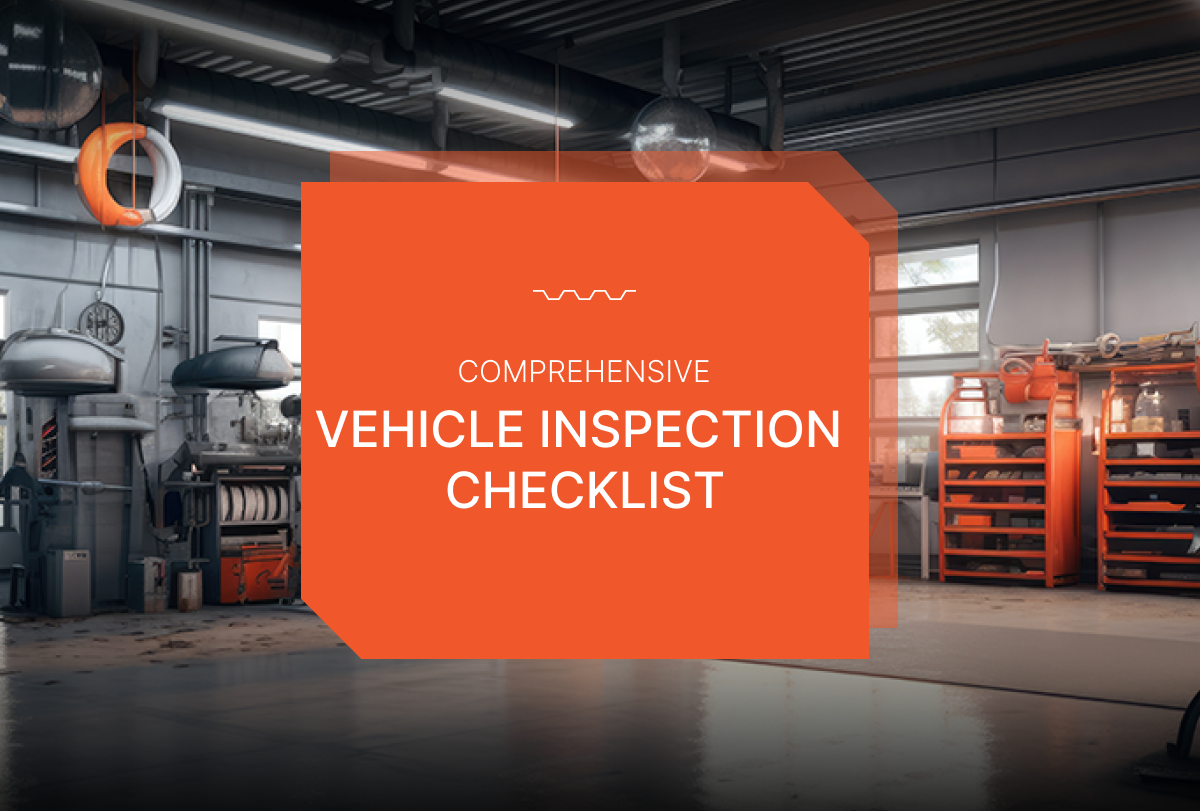
Below, you'll find a downloadable 100-point vehicle inspection checklist, a breakdown of what every technician should check, and an overview of how digital vehicle inspections can sharpen your workflow.
A full inspection covers every system that affects safety, drivability, and reliability. The comprehensive 100-point checklist below gives your technicians a strong baseline they can follow on every repair order.
Vehicle intake
Log the VIN and license plate to confirm the vehicle's identity and match past service records.
Record odometer reading in and out.
Note customer-reported concerns and the reason for the visit.
Check the body for dents, scratches, and any signs of damage.
Inspect the bumpers front and rear for cracks, loose mounts, or impact marks.
Confirm the license plate is secure, legible, and properly mounted.
Note any rust, paint issues, or trim damage.
Inspect fenders, rocker panels, and body panel alignment.
Inspect glass, windshield, and mirrors for chips, cracks, or pitting.
Check door handles, hinges, and weather stripping.
Inspect child safety locks.
Inspect the trailer hitch.
Lights and electrical
Headlights on low and high beam.
Taillights and brake lights.
Turn signals front and rear.
Hazard flashers.
License plate lights and dashboard illumination.
Reverse lights, fog lights, and daytime running lights.
Interior dome, map, and courtesy lights.
Any warning light that's illuminated on the dashboard. A check engine light, ABS warning, or airbag indicator tells you where to focus diagnostic time.
Battery voltage, terminals, and charge/discharge load test.
Alternator output and starter draw.
Ignition switch and accelerator pedal function.
Horn operation.
Tires and wheels
Check tire pressure on all four tires plus the spare.
Measure tire tread depth.
Check for uneven wear patterns that can point to alignment or suspension issues.
Inspect sidewalls for cracks, bulges, or embedded objects.
Check valve stems and caps for leaks or damage.
Review the tire DOT date code for age.
Verify wheel condition, lug nut torque, and hub cap security.
Check the spare tire, jack, lug wrench, and locking wheel lock key.
Confirm the tire pressure monitoring system (TPMS) is functioning.
Brake system
Check brake pads for thickness and wear patterns.
Inspect rotors for scoring, warping, or excessive wear.
Examine brake drums and shoes, if equipped.
Check brake calipers for sticking, leaks, or damaged boots.
Check brake fluid level and condition at the master cylinder.
Examine brake lines and hoses for cracks or leaks.
Test parking brake function and adjustment.
Evaluate overall brake pedal feel, travel, and pulsation.
Verify ABS sensors, wiring, and warning light operation.
Steering and suspension
Inspect the steering wheel for play and responsiveness.
Check steering column and intermediate shaft for looseness.
Check power steering fluid level and condition.
Examine tie rods and ball joints for wear.
Check struts for leaks or damage.
Inspect shock absorbers for proper dampening and leaks.
Check CV boots and axle shafts.
Inspect wheel bearings for noise or excessive play.
Inspect sway bar links, bushings, and control arms.
Look for uneven ride height or sagging that can indicate a failing spring.
Under the hood
Check the battery capacity.
Check engine oil level and condition.
Check the oil filter for leaks and proper seating.
Inspect transmission fluid.
Check coolant level, condition, and the cooling system for leaks.
Inspect brake fluid, power steering fluid, and washer fluid reservoirs.
Inspect the battery, cables, and hold-down hardware.
Examine the serpentine belt and any drive belts for cracks, glazing, or fraying.
Check all hoses for soft spots, swelling, bulges, or leaks.
Inspect the engine air filter and cabin air filter.
Check the fuel filter, if serviceable.
Inspect the PCV valve and evaporative emissions components.
Check the radiator and condenser fins for debris or damage.
Check engine and transmission mounts.
Look for oil leaks at the valve cover, oil pan, and gaskets.
Test the spark plugs and ignition components.
Inspect air intake.
Inspect fuses.
Under the car
Check the exhaust system for leaks, rust, and damaged hangers.
Inspect the muffler, resonator, and heat shields.
Inspect fuel system components, lines, and the fuel tank for leaks or corrosion.
Look at the transmission and differential housings for leaks.
Check the oil pan and drain plug for seepage or stripped threads.
Examine the frame, subframe, and undercarriage for rust or impact damage.
Check emissions-related components like the catalytic converter and oxygen sensors.
Inspect the driveshaft, U-joints, and center support bearings.
Verify skid plates and underbody shielding are secure.
Scan the ground under the vehicle for any fluid drips or leaks.
Interior and safety equipment
Test seat belts for retraction, fraying, and buckle function.
Confirm airbag and supplemental restraint indicators clear properly.
Inspect windshield wipers and wiper blades for streaking or splitting.
Test washer fluid spray on the windshield and rear glass, if equipped.
Inspect interior warning lights.
Check AC, heat, and all fan speeds.
Test front and rear defrosters.
Inspect infotainment displays and systems.
Test door locks, power windows, and the key fob.
Inspect driver-assist systems, backup camera, and parking sensors.
Inspect lane departure systems.
Road test
Confirm smooth engine start and stable idle.
Evaluate transmission shift quality and clutch engagement, if manual.
Test braking response, pedal feel, and stopping distance.
Listen and feel for suspension noise, vibration, or harshness.
Check cruise control and driver-assist system operation.
Note any dashboard warning indicator, abnormal smoke from the exhaust, or unusual vibration that appears during the drive.
What are digital vehicle inspections (DVIs)?
Paper inspection checklists worked for decades, but they come with real costs: illegible handwriting, lost sheets, no documentation, and frustrating back-and-forth among the technician, service advisor, and customer.
Digital Vehicle Inspections change that. With Tekmetric, your technicians perform the inspection on a tablet or phone, attach photos and videos of anything that needs attention, and send a vehicle health report straight to the customer's phone.
Here's what that looks like in practice: A technician notices worn brake pads on a 2019 Toyota Highlander. Instead of writing a note the customer may not understand, the technician snaps a photo of the worn pad next to a new one, records a short video, and marks the task red for immediate attention. The service advisor builds the estimate and texts it to the customer. Whether they're an in-store customer in the waiting room or at work across town, the customer approves the job with a digital signature.
Tired of piles of paper inspections? Upgrade your shop with digital vehicle inspections. Send inspections to the customer for approval with the visual proof needed to close the deal.
Why car inspections matter
Every car owner is counting on your team to catch what they can't see. A consistent inspection process gives your technicians a repeatable way to do exactly that on every repair order, every time.
Inspections also drive revenue. When you document a vehicle's condition clearly with photos and notes, customers understand exactly what their car needs and why. They approve more of the work they genuinely need when they can see the evidence.
Build customer trust with digital vehicle inspections
A great inspection process isn't about checking boxes. It's about giving every vehicle owner a clear, honest picture of their car's condition so they can make informed decisions about their safety and their budget. When your shop pairs a thorough inspection process with a digital tool like Tekmetric's DVI, you give your team the speed and consistency they need and your customers the transparency they want.
In auto repair, there are many moving parts to keep track of—both the literal parts your shop uses to repair vehicles, and the parts of your business that determine your shop’s efficiency, security, and ability to grow. If you want your shop to flourish, it’s crucial to devote part of your business to keeping track of the parts you order.
Many shops track parts in terms of cost of goods sold. The parts you need for the job are included on every repair order, so it’s easy to see what parts your customers are paying for as long as you have a solid process for building repair orders.
But what about in terms of accounts payable? How does your shop track how much you’re spending for parts from the supplier?




.svg)


.svg)

.svg)
.svg)
.svg)
.svg)
.svg)
.svg)