Top Interview Questions for Automotive Mechanics

David Fantin

|

March 25, 2025

|

Read time: 3 min

Mechanic interviews are challenging for both the employer and candidate because the right candidate has to be a fit in personality and technical ability. Plus, the numerous certification types, manufacturer nuances, and shop needs make it even more challenging to become a mechanic.

This guide can be used to help repair shops/dealerships ask the right questions and also help technicians be prepared for questions they will likely encounter. Below you will find the most common car mechanic interview questions broken down by mechanic and service advisor level plus tips to ace your next interview.

Top mechanic job interview questions

While every auto repair shop differs in how they run their job interview process, these are some of the most common questions you can expect. Ranging from technical questions to customer service, be prepared to answer these common questions before your next interview.

An image highlighting the top job interview questions for mechanics.

General interview questions for car mechanics

These common questions cover basic automotive repair experience and relevant work history.

  • Tell me about yourself and your experience as an automotive technician.
  • Why do you want to work for our company/shop?
  • How do you stay up to date with new automotive technologies and repair techniques?
  • What certifications do you currently hold (ASE, manufacturer-specific, etc.)?
  • Are you comfortable working weekends, evenings, or overtime if needed?

Technical interview questions for mechanics

These technical interview questions cover more specific hand-on experience and tools/equipment.

  • Which repairs are you best at?
  • How much would you estimate your tool inventory to be worth?
  • What steps do you take when diagnosing a check engine light?
  • What tools and diagnostic equipment are you most familiar with?
  • Have you worked with hybrid or electric vehicles?
  • Do you believe in factory recommended vehicle maintenance intervals?
  • How comfortable are you with OEM scan/diagnostic tools?

Experience & situational questions for mechanics

These questions help employers understand how you would handle various shop situations and also helps them understand your communication skills.

  • Can you describe a time when you had to work under a tight deadline?
  • How do you deal with angry customers?
  • How do you prioritize tasks when you have multiple vehicles to work on?
  • What would you do if you made a mistake on a repair? How do you handle accountability?
  • What do you do if you encounter a vehicle with an issue you've never seen before?

Additional questions to expect

  • Are you comfortable serving those in need once a month?
  • Are you comfortable doing a DVI on the majority of vehicles you touch?
  • How do you handle a high-pressure environment when the shop is busy?
  • How do you handle a situation where you're unsure about how to fix a problem?
  • Tell me about a time you went above and beyond for a customer?

Top interview questions for service advisors

While the interview questions for service advisors will be similar to mechanics, there will be small differences. Typically, service advisors will be more customer facing and shops will tailor their questions to focus more on customer service and communication style.

General interview questions for service advisors

  • Are you comfortable selling repair services?
  • Are you comfortable working on a commission based salary structure?
  • Who do you believe has the best after market products?
  • Which shop management software is your favorite?
  • How do you deal with a customer saying that you are more expensive than their last shop?
  • How do you win back angry customers?
  • How do you handle over the phone quotes?

Technical interview questions for service advisors

  • What are your greatest strengths as a service advisor?
  • Who do you trust for moving electrical parts?
  • How do you handle working in a fast-paced environment?
  • Are you comfortable meeting sales goals and upselling services?
  • How do you stay up to date with new automotive technology and service trends?
  • How do you handle stress during busy hours?

Experience & situational questions for service advisors

  • How do you explain complex vehicle repairs to a customer who doesn’t understand cars?
  • What steps do you take to build trust with customers?
  • Have you ever had to deal with a miscommunication between a technician and a customer? How did you resolve it?
  • Can you describe a time when you turned a dissatisfied customer into a repeat customer?
  • How do you handle multiple customers needing assistance at the same time?

Additional questions to expect

  • How do you explain the importance of routine maintenance to a customer?
  • What experience do you have with automotive service software or point-of-sale systems?
  • How do you prioritize repair orders and schedule work efficiently?
  • How do you explain repair estimates to customers?
  • How would you respond to 1-star reviews?

Job interview tips for mechanics

  • Research: Not all shops are created equal so make sure to research before applying to make sure they are a good fit. You can also look at online reviews to see what their customers are saying.
  • Preparation: Use the commonly used questions above to help you prepare for the interview. Practice how you would answer each question and ways you can present yourself well.
  • Attire: You have 7 seconds to make your first impression and attire is a big part of that. Dress to showcase your professionalism and experience.
  • Highlight your experience/certifications: Showcasing your certifications and experience can go a long way to in making sure you land the job.
  • Ask thoughtful questions: Some interviewers will allow you to ask questions during the conversation. Make sure you have a few questions to ask that help you learn more about the shop.
  • Follow up: if you haven’t heard back from the shop and you are still interested, give them a call and remind them of your interest in the position.

Final thoughts

Interviews are challenging in any industry but mechanic interviews can be even more challenging with the shortage of talent available. This guide will help you either prepare for your next interview or provide you with common questions to ask your next hire. Lastly, always hire for culture fit and talent second. Culture problems are a lot harder to correct than technical car knowledge.

👉 Ready to grow your automotive business? [Book a personalized Tekmetric Demo Here]

FAQ

How do I prepare for a mechanic interview?

What should I wear to an automotive interview?

More articles

As a shop owner, you have the ability to tune into your shop’s performance metrics, employees’ bandwidth, and overall profit margins with a few clicks.

Lucas Underwood and David Roman, hosts of the ASOG podcast, recently sat down with Tekmetric CEO Sunil Patel at the Vision Hi-Tech Training and Expo in Kansas City, Kansas.

Sunil shared some key insights into facing challenges, embracing change, streamlining processes, prioritizing customers, and the power of “always starting with why.”

Note: the following answers have been condensed for clarity.

On Facing Challenges and Handling Stress

ASOG: We spoke with PJ Leslie (Tekmetric’s Business Development Director) recently, and he was talking to us about your ability to take anything that comes your way and overcome it.

PJ shared with us that no matter the circumstance, you’re always able to say, “We’re going to get through this, and we’re going to make something from it.”

You created an amazing thing despite the adversity that you’ve faced. How were you able to do that?

Patel: My wife and I went through some hard times with our daughter, Brianna, about a year ago.

And what I told my wife during that time was, “You know what? I’m ready to face this challenge.

We’re going to find the best doctor we can find and the best solution for her. And Brianna will live life one day at a time.

We’re not going to think about the future, we’re going to live life today.”

Since that day it’s been almost ten months and everything has been great. She’s doing beautifully.

A key component to handling stress is delegation.

You’ve got to let go of some of your responsibilities no matter how unnerving it is. Remind yourself that you can continue to keep your momentum on your shop, business, and goals by delegating.

That’s why you have a team—so you can tackle and conquer each task that comes your way.

On Embracing Change and Switching Gears

ASOG: You’ve gone from being a physician to a police officer to an auto repair shop owner, and now you’re the co-founder and CEO of Tekmetric. What made you want to go from physician to shop owner?

Was there a rock bottom for you? Was there a point where you decided, “I don’t want to be a physician any longer?”

Patel: I was fortunate that I never hit rock bottom. I’ve always tried to live in the moment. And I’m always intrigued by learning new things. With that being said, it took me going from industry to industry to learn the skills that helped form Tekmetric.

Let’s say you set a goal for yourself to go to the gym more often.

Now, if you don’t want to go to the gym, then you will keep training your mind to make sure that gym is just not your thing. It’s not until you have a breakthrough that you are able to change your mindset.

You have to train your reticular activating system (RAS), a network of nerve pathways located in the brain stem that mediates overall behavior, so that going to the gym becomes a positive activity.

Along with reminding yourself that you want to go to the gym, write down when you want to make the change and why.

Let’s say this is your goal, 'In March 2023, I will feel great, I will look great, my clothes will fit me better, and I can hear my family and friends saying ‘You’ve done a fantastic job.'

You have to recognize and reframe each limiting belief that is preventing you from achieving your end goal. An example of a limiting belief would be something along the lines of, "Ah, I’ve had a long day, I can just go to the gym tomorrow.' You have to reframe it to, 'I’ve had a long day, time to finish strong with a trip to the gym.'

You have to be very intentional. You truly have to want to reach the finish line.

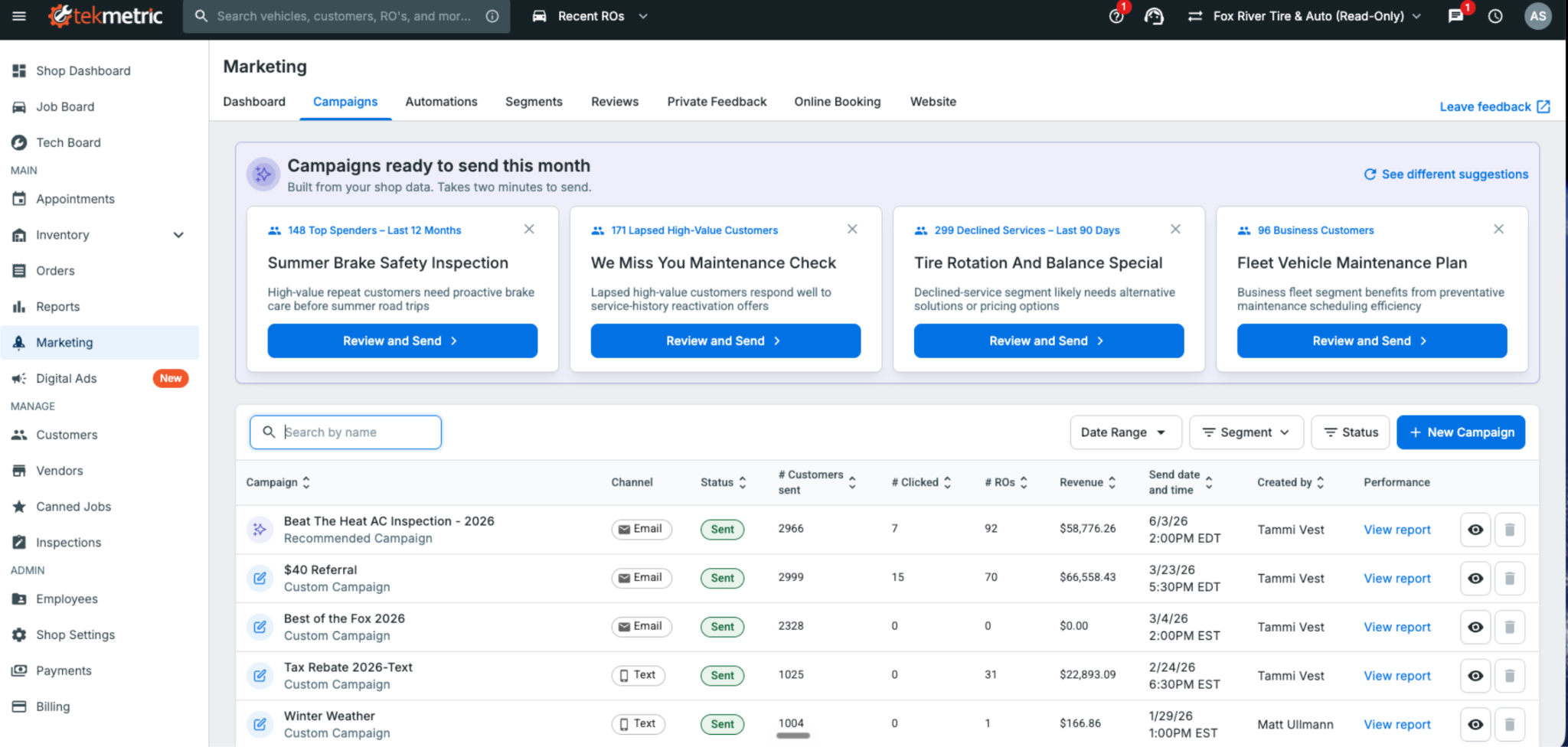
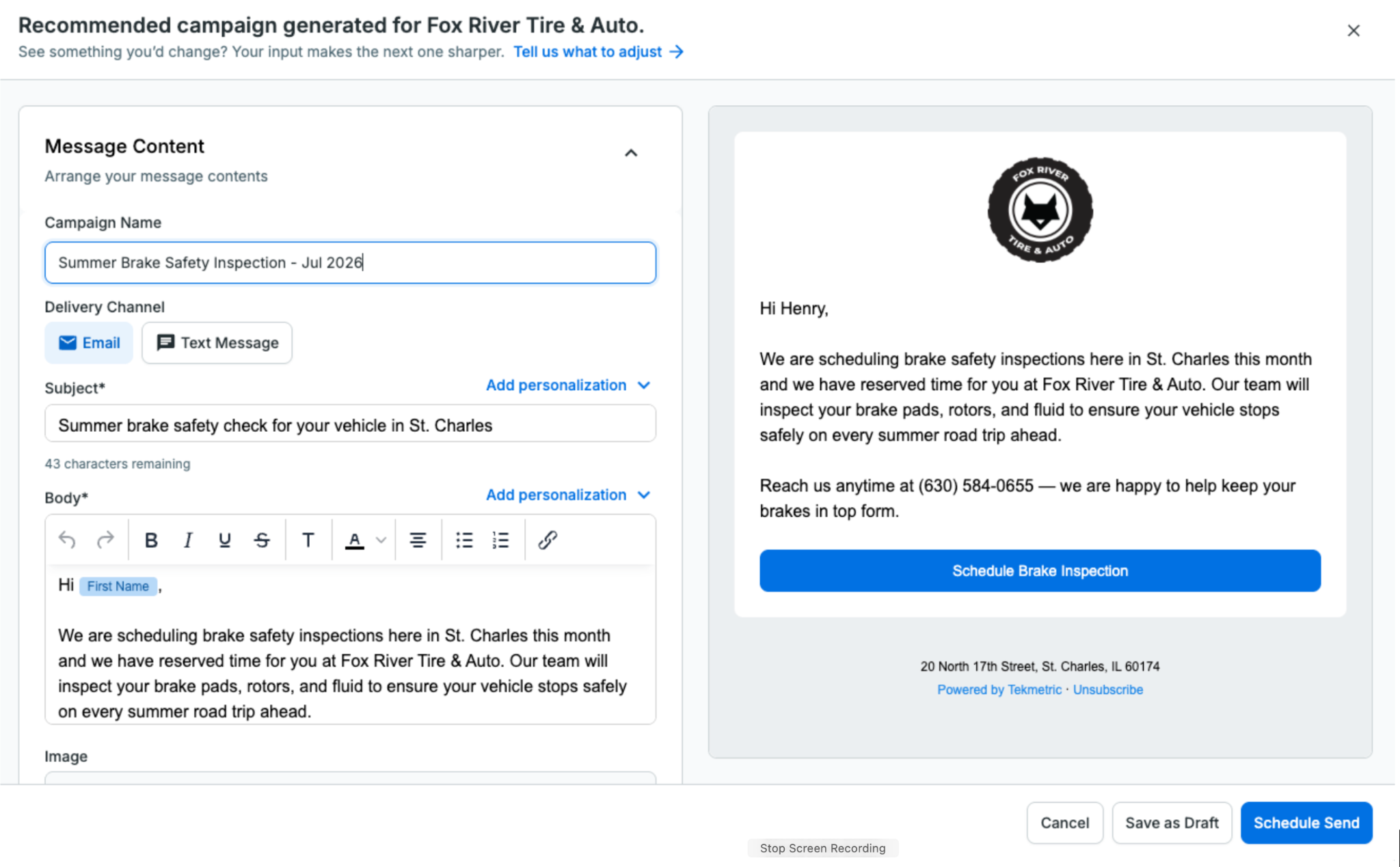
This concept goes for shop owners, too. If you’re wanting to expand your shop, you’ll need to change the way you’re running your business. You can do that with shop management software.

Transforming the Shop Owner Experience with the Right Tools

March 24, 2022

Read time: 3 min

read more

With just the right tools for the job, every repair can be so much easier. There's a reason some car manufacturers produce their own unique tools, and while they might seem unnecessary, they can turn hours into seconds.

Even so much as a proprietary socket with a unique angle to remove an oil drain plug tucked right up against the subframe, as silly as it may seem, is worth the extra little investment. The adage still rings true, that ultimately time is money -- saving time keeps your shop running like a well-oiled, rear-midengined dry-sump V8.

Running an independent auto shop requires the right tools, and not just the right impact wrenches or the right alignment rack. 

The right shop management system can revolutionize the way your shop runs, from the moment customers call or walk in, to receiving payments and getting vehicles back on the road.

Learn why Tekmetric is the right tool for the job for shop management from some of the brilliant minds behind the revolution:

The Biggest Benefits of The Right Shop Management System

Enhanced Customer Experience: Put your customers first with a suite of features that allows you to easily communicate to build the trust needed to run a successful repair shop. Simplified operations in your shop naturally lead to improved customer service.

Higher Efficiency: Save time on manual tasks with a set of features that allows you to run your shop the way you see fit with easy-to-build automation, custom RO labels, and templates across the shop. Focus on the customer, and not a computer screen.

Why Tekmetric is The Right Tool for Shop Management

February 29, 2024

Read time: 3 min

read more

If you've been running your shop on paper repair orders, a whiteboard, or a mix of disconnected tools, you've probably wondered about shop management software. You’ve also likely questioned what it does and whether it's worth the cost and the disruption of switching to a digital system. 

This blog post answers both questions directly with a clear explanation of what auto repair shop management software is, how it works in a real shop, and the signs it might be time to look at one.

What Is Auto Repair Shop Management Software?

Auto repair shop management software is a platform that connects the core workflows of your shop — from writing estimates to completing repairs to collecting payment — in one place. Instead of tracking jobs on paper, managing parts in spreadsheets, and texting customers from your personal phone, everything lives in a single system your whole team can access.

At its core, it's a connected digital workflow for every repair, from the moment a car pulls in to the moment it pulls out.

📋 Quick Definition
Shop Management Software (SMS):
Also called a shop management system, is a digital platform that handles the operational and customer-facing workflows of an auto repair shop: repair orders, estimates, digital vehicle inspections, parts ordering, customer communication, invoicing, and reporting. Cloud-based platforms like Tekmetric can be accessed from any device without on-site servers.

A Step-by-Step Guide of What It Does

The easiest way to understand shop management software is to follow a repair from start to finish and see what the platform touches at each step.

1. Customer Arrives: Write-up and Scheduling

When a vehicle comes in, the service adviser opens a new repair order (RO) directly in the software. Customer info, vehicle history, and previous service notes are already there. There’s no need to search through masses of paper, and no digging through filing cabinets.

2. Technician Inspection: Digital vehicle inspection (DVI)

The tech completes a DVI on a tablet or mobile device, adding photos and videos of anything that needs attention. The results are automatically attached to the repair order and can be sent directly to the customer by text before the service adviser even picks up the phone.

This is one of the biggest workflow shifts shop owners find most beneficial. Customers can review inspection results, see pictures of the issue, and approve or decline work from their phone with no callbacks.

💬 From a Tekmetric customer
"The text feature is a huge hit — customers can review inspection results, check estimates, and approve repairs with just a click. The system is really streamlined and everything is integrated, making our workflow way smoother than before."
- Verified Tekmetric Customer, G2 

3. Estimate Building and Approval

Once the DVI is complete, the service adviser builds an estimate inside the same system. Parts prices, labor rates, and canned jobs are already set up so advisers aren't manually pricing every line. The estimate flows directly into the repair order once the customer approves.

4. Parts Ordering

Parts ordering happens inside the platform, too. Service advisers can submit orders to their suppliers directly from the repair order, track delivery status, and receive parts against open jobs without leaving the system.

5. Work is Performed and Technicians Stay on Track

The tech board gives service advisers and managers a real-time view of every job in the shop: what's waiting, what's in progress, and what's ready. Techs can update job status from their own device, which keeps the whole team on the same page without walking back and forth to the front desk.

6. Invoice and Payment

When the job is complete, the repair order becomes an invoice. Payment can be collected at the counter, sent by text, or processed through a payment link — depending on how the shop is set up.

7. Customer History

Every completed repair, every declined service, every inspection — it's all stored in the customer's profile. Next time they come in, the service adviser already knows what was done, what was deferred, and what's coming up. That's how you build trust and bring customers back.

What Does It Replace?

Most shops that switch to a management platform are replacing one or more of the following:

  • Paper repair orders and handwritten estimates
  • Printed or whiteboard job boards
  • Phone calls and personal texts for customer communication
  • Spreadsheets for parts inventory and pricing
  • Separate software tools for inspections, scheduling, and invoicing that don't talk to each other
💬 From a Tekmetric customer
"We were originally running our shop with two systems; one was for digital inspection and the other was our shop management system. ... I was spending $1,000 a month between the software companies and the IT support. And if the internet connection blipped for a split second, my digital inspection went down for about an hour. Now I'm paying a fraction of what I was before. … We saved a bunch of money, and the estimate writing process is much faster because the labor guide is built into the system."
- Stephane Grabina, Excluservice, Tekmetric Customer  

Signs Your Shop Needs a Digital Shop Management System 

You don't need to be a high-volume shop to benefit from management software. Here are the signals that tell you it's worth a closer look:

  • You're writing the same information down in multiple places such as a paper RO, whiteboard, or a text to the customer
  • Technicians are walking to the front desk to ask questions that should already be in the job
  • You can't tell at a glance how many cars are in progress or where each one stands
  • Customers call asking for updates that your team has to scramble to find
  • You're leaving declined work in your head instead of a system and losing follow-up opportunities
  • Your end-of-day reporting comes from memory or a calculator

None of these are signs of a poorly run shop. They're signs of a shop that has outgrown what paper and disconnected tools can do.

Do You Actually Need It?

If your shop is processing more than a handful of cars a day, the answer is yes. 

The goal of shop management software isn't to add another system to manage. It's to replace the friction in your current process — the paper, the callbacks, the manual pricing, the jobs that fall through the cracks — with one workflow your whole team can use.

"It integrates every aspect of running our shop — from scheduling appointments and messaging customers to integrating payments and sending invoices." - Gigi Collier, G2 Review, Tekmetric Customer 

📌 Bottom Line
Auto repair shop management software connects your repair orders, inspections, parts, customer communication, and reporting in one place. It replaces the paper and disconnected tools most shops are running on today and gives you the visibility to run your business with more confidence and less noise.

What to Look For in a Shop Management Platform

Not all platforms are built the same. The best ones don't just digitize each task — they connect them, so information moves from one step to the next without anyone rekeying it.

Repair order and estimate workflow
The platform should make it fast to write up a job, build an estimate, and convert it to a repair order without re-entering anything. Look for built-in labor guides and canned jobs so your team isn't pricing from scratch every time. On Tekmetric, estimates flow straight into the repair order, and labor and parts matrices keep pricing accurate and margins protected.

Digital vehicle inspections (DVI)
DVIs are one of the highest-impact features in any shop management platform. When technicians attach photos and videos and customers approve work from their phones, authorization rates climb and comebacks drop. The lift is measurable: shops on Tekmetric average $612 per repair order, rising to $741 once digital vehicle inspections are in use. Customers approve more work when they can see exactly what their vehicle needs.

Parts ordering and inventory
Look for parts ordering built into the repair order, so your team submits orders without leaving the job or logging into a separate portal. Tekmetric connects to more than 70 integrations, including the parts suppliers most shops already use, and inventory tracking helps prevent shortages while protecting your parts margin.

Customer communication
Two-way texting, digital estimates, and automated follow-ups should be built in, not bolted on through a third-party tool. Every extra place your team has to go to reach a customer is another place things fall through the cracks. Tekmetric keeps it in one platform: text a customer, send an estimate, and follow up on a declined service from the same screen.

Reporting and visibility
A strong platform gives you a live view of what's happening in your shop right now — car count, technician productivity, average repair order — without pulling a report or doing the math. Tekmetric's real-time reporting puts those numbers in front of you as the day unfolds, so you can coach your team and clear bottlenecks while it still matters, instead of finding out next week.

Cloud-based access
Cloud-based platforms don't need an on-site server to maintain or replace, they back up your data automatically, and they let you log in from anywhere — the shop, home, or the road. Shop owners on Tekmetric point to exactly this: no server to buy and swap out every few years, and the freedom to work from any terminal at any location. It matters more than most owners realize until the day they need it.

See How Tekmetric Works

Tekmetric is the shop management platform built for independent auto repair shops. Repair orders, digital inspections, parts ordering, payments, and real-time reporting all run in one system, on any device. There are no servers and no syncing between tools that don't talk to each other and one login for the whole team.

It was built by someone who lived through the problem. Founder and CEO Sunil Patel ran his own shop and built Tekmetric to clear the friction he hit every day. More than 15,000 shops now run on it, connected to more than 70 integrations for the parts suppliers, labor guides, and accounting tools they already use.

What Changes When the Workflow Connects

When inspections go digital, customers see exactly what their vehicle needs — photos, videos, and clear findings in a single message. When they understand the work, they approve more of it. The results track it: Tekmetric shops average $612 per repair order. With digital vehicle inspections in use, that average rises to $741. Add MotoVisuals educational videos, and it reaches around $800. It’s the same honest work, but more of it is approved because customers understand what they're paying for.

That's the pattern across the platform. Faster turnaround from check-in to checkout. More cars through the bays. A customer experience that earns repeat visits. The friction falls away, and shops run on results instead of guesswork.

💬 From a Tekmetric customer
"The amount of information that is available to the front desk, the service adviser, and the technician at a glance is very impressive, and the functionality of it together is great."
— Moises M., Guest Service Representative, G2 Reviews, Tekmetric Customer