The Connected Shop: How to Eliminate Bottlenecks and Grow Your Average Repair Order

Kris Turner

|

May 14, 2026

|

Read time: 3 min

One multi-shop operator switched to Tekmetric and doubled monthly revenue in two years. He shared how in a recent Tekmetric and PartsTech webinar.

Auto repair shops are under more pressure than ever. Tighter margins. A technician shortage that isn't going away. Customers who expect speed, transparency, and a frictionless experience every time they walk through your door.

Yet many shops are still running on disconnected systems, manual workarounds, and processes that haven't changed in a decade. The result? Bottlenecks that bleed time, stall revenue, and cap growth — often without the shop owner even realizing it.

This is the problem a recent ShopOwner webinar, sponsored by Tekmetric, tackled head-on. The conversation centered on one deceptively simple idea: the connected shop.

In this article, you'll learn what a connected shop workflow looks like in practice, how one multi-shop operator doubled monthly revenue after switching to Tekmetric, where the most common operational bottlenecks are hiding in your estimating process, and how features like SmartJobs, parts and labor matrices, and good/better/best estimates can raise your average repair order (ARO) — the average dollar amount collected per repair order — without adding headcount.

What a Connected Shop Actually Means

A connected shop isn't just about having software. It's about having the right systems talking to each other — and having your team actually use them.

John Phelps, director of channel partnerships at Tekmetric, put it plainly: "Just because you have an oven, that doesn't make you a chef. You can have the technology, but if you're not leveraging it properly, what good is it doing?"

That distinction matters. Technology for its own sake is another bill. Technology deployed with intention — one that connects estimates, parts ordering, inspections, payments, and customer communication into a single workflow — is a growth engine.

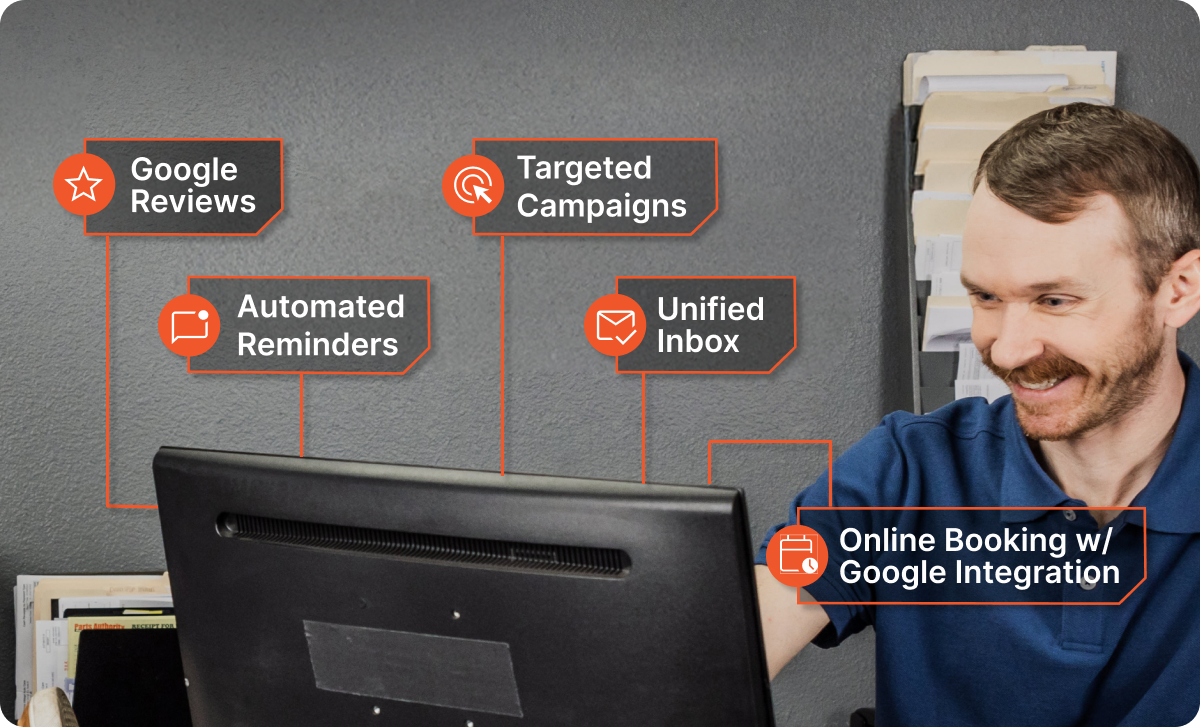
Tekmetric is built to be exactly that. With 70-plus integrations, built-in digital vehicle inspections (DVIs — digital inspection forms that capture photos, videos, and findings shared directly with customers), real-time reporting, and a native mobile app for technicians and service advisors, it's designed so every step of the repair order (RO) flows into the next without friction, duplication, or lost data.

One Shop Owner Doubled Monthly Revenue After Switching to Tekmetric

Tim Lanier knows what a revenue ceiling feels like. As president and CEO of Lanier Auto Group — which today operates four rooftops in the northern Atlanta suburbs — he spent years running a single shop that simply could not break through a certain monthly revenue level.

"We were stuck," Lanier said during the webinar. "We had our ways of doing things. A lot of copy-paste out of catalogs into the shop management system."

In March 2020, he made the switch to Tekmetric.

"As soon as we made that change, it opened the door to a lot of new possibilities — some of which we just didn't anticipate." He added: "We probably doubled our sales in about two years once we made the switch."

At the time of switching, Lanier's single rooftop was generating roughly $200,000 per month. Two years later, that number had climbed to approximately $400,000 — a structural shift in what the business was capable of, not just an incremental gain.

What unlocked it? A connected workflow that brought parts ordering, DVIs, payments, accounting, marketing, and inventory into one platform. The glass ceiling, as Phelps framed it, became a paper ceiling. And Lanier's team broke right through it.

The Estimating Bottleneck Is Costing Your Shop More Than You Think

When Phelps asked Lanier to name the single biggest operational bottleneck he's had to overcome, the answer was immediate: the estimating process.

"If you don't come up with systems to streamline things, that person becomes the bottleneck in the shop," Lanier said. "Some tickets can take 30 minutes to an hour to find all the parts and pieces you need for big jobs."

His solution? Get technicians directly involved — and give them the tools to act on that involvement.

"We've empowered the technicians by giving them a computer at their bay and a dual monitor setup so they can go straight into Tekmetric, pull up PartsTech, use diagrams and photos to quickly identify the exact part they need, and put the part on the ticket," he explained.

The result: estimates arrive at the service advisor roughly 90% complete. Advisors clean up grammar, add photos, and present. That's it. No back-and-forth. No shouting across the shop floor.

This is the connected shop in practice. Tekmetric's integration with PartsTech means technicians can search multiple suppliers in one lookup, confirm part specifications, and add items to ROs without leaving the platform. What once took an hour can be compressed into minutes — with fewer errors and fewer return trips.

Pricing Consistency Drives ARO Growth

One of the most overlooked drivers of ARO growth isn't sales technique — it's consistency.

Phelps highlighted this during the webinar: if a customer calls back a week later asking for a brake quote and gets a number $50 different from what they were told before, trust breaks down. Inconsistency in how estimates are built — varying labor rates, different parts markups, or service advisors quoting from memory — costs shops money and customers.

Tekmetric addresses this directly. Parts matrices and labor matrices create a consistent pricing foundation so every estimate reflects the shop's actual margins, regardless of which advisor builds the ticket or when. SmartJobs — Tekmetric's proprietary canned job system that automatically pre-populates parts, labor, and job notes for common services — takes this further by ensuring the right components populate every time, on every RO.

"If you're not using SmartJobs, powered by PartsTech, in Tekmetric, reach out to support, get your SmartJobs set up, and you'll be taking a massive step forward,” Jake Benson, director of strategic accounts at PartsTech, said during the webinar.

How to Present Good, Better, Best Estimates Without Starting From Scratch

Economic uncertainty means customers are making tighter decisions. Giving them options isn't just good customer service — it's good business.

In Tekmetric, shops can build a good/better/best estimate structure without starting from scratch three times. Build the base estimate, duplicate it, add parts or labor for each tier, and text all three options to the customer. A built-in checkbox at the job level keeps declined or unchecked options out of close ratio reporting, so advisors aren't penalized for presenting choices.

The same system works for tires, fluid services, brake packages, or any job where tiered pricing makes sense. Shops that present options consistently report higher approval rates and stronger customer relationships — because customers feel informed rather than pressured.

Tekmetric Is Built to Scale With Your Shop

Lanier's growth from one rooftop to four over the last four years didn't happen by accident. He credits systems and processes — and the ability to replicate them — as the core of that expansion.

"Once you figure out your systems and processes, things begin to click," he said. "It all becomes a lot easier."

Tekmetric is built to scale with that ambition. Whether you're running a single shop or managing multiple rooftops, the platform gives ownership real-time visibility into performance across every location — ARO, technician efficiency, close ratio, and more — without requiring an extra step to pull the data.

The connected shop isn't a future state. For shops like Lanier Auto Group, it's already the standard. The question is whether yours is built the same way.

Watch the full on-demand webinar from Tekmetric and PartsTech — How to Simplify Shop Operations and Increase Your Average Repair Order — and hear directly from shop owners and industry experts on the strategies and tools driving real results in 2026. 

👉 Ready to grow your automotive business? [Book a personalized Tekmetric Demo Here]

FAQ

The Connected Shop

Easier Estimates

Consistency is King

Give Customers Options

More articles

For every auto repair business, creating a clear and professional receipt isn’t just good practice—it’s essential. Whether you're working on a major vehicle repair or a routine oil change, a detailed receipt serves as a proof of payment for the customer and a legal record for your shop. It helps you maintain transparency, build trust, and protect both parties in case of disputes or warranty claims.

If you’re building your own auto repair invoice template or refining your existing process, this guide walks you through every element your auto repair receipt template should include. From contact information to labor costs, here’s what a comprehensive auto repair receipt looks like.

Auto repair shop receipt example template

We designed an auto repair shop receipt template for you to download and use in your shop. The template can be used for auto body repair shops, mobile mechanics, general repair shops, and tire shops.
Download the free template below and modify it as needed to utilize in your shop.

AUTO SHOP RECEIPT TEMPLATE DOWNLOAD

What Should Be Included in an auto repair shop receipt?

1. Shop contact information

The first thing on your receipt should be your auto repair shop’s full contact information. This builds credibility and ensures customers know how to reach you if follow-up is needed.

What to include:

  • Shop name
  • Address
  • Phone number
  • Email address
  • Website (if applicable)
  • Business logo for branding

A well-organized template with your logo and contact information at the top makes your documents look professional and trustworthy.

2. Customer Information

Next, capture the customer’s name and their contact information. This ensures the receipt is tied to the correct individual and helps with record-keeping for recurring car repair clients.

What to include:

  • Customer's name
  • Address
  • Phone number or email

This section ensures your auto repair business can easily identify who the repair services were for and reach them quickly if needed.

Tek-Tip: Wouldn’t it be great if there was an estimate building software that could do this for you? Tekmetric offers auto repair estimate software among other features.

3. Date of service and invoice number

Every mechanic receipt needs to include the date of service and a unique invoice number. This creates an accurate timeline and helps organize documents chronologically for tax reporting, audits, or warranty purposes.

What to include:

  • Date the service was completed
  • Unique invoice number
  • Optional: technician’s name or initials

4. Vehicle information

For any automotive service, tying the repair order to a specific vehicle is a must. This helps with real-time service tracking, vehicle history reporting, and future maintenance recommendations.

What to include:

  • Year, make, and model
  • Vehicle Identification Number (VIN)
  • License plate number
  • Mileage at the time of service

5. Description of services performed

This is the heart of the receipt. Clearly outline what repair work was done and what repair services were provided. The more detail, the better.

What to include:

  • Itemized list of services
  • Description of each job (e.g., “Brake pad replacement” or “Engine diagnostic”)
  • Associated labor costs for each service
  • Cost of parts

6. Parts and material breakdown

An itemized list of parts and materials used in the repair work is just as important as the labor section. This transparency helps avoid disputes and gives your customer clarity on what they’re paying for. Most auto repair shops don’t show the markup percentages on parts but you can if you want to maximize transparency.

What to include:

  • Part name and number
  • Quantity used
  • Cost per unit

7. Balance Due and Payment Summary

Now it’s time to outline the financials, from the subtotal to the total amount. This section should also include the total cost, taxes, discounts, and any payment options you accept.

What to include:

  • Subtotal (before tax)
  • Taxes (state/local)
  • Any discounts or promo codes
  • Total amount due
  • Payment methods accepted (e.g., cash, credit card, financing)
  • Amount paid and remaining balance
  • Due date for final payment, if applicable

Including this section with clear headings avoids confusion and can prevent billing issues down the line. It also ensures the receipt can function as proof of payment. Lastly, this is a great place to feature your financing options (if applicable).

8. Warranty Information

Warranty details protect both your shop and your customer in case a part fails or a job needs to be redone. If your auto repair shop offers any warranty, you need to clearly list what’s covered and for how long.

What to include:

  • Warranty length (e.g., 12 months or 12,000 miles)
  • What is and isn’t covered
  • Instructions for claiming the warranty
  • Any third-party coverage (for example, if a part manufacturer offers a separate warranty)

This section should be written in clear, non-technical language to help customers fully understand their protections. You may want to include a signature line for the customer to acknowledge receipt of the warranty.

9. Streamline receipts

Creating receipts and invoices by hand can be tedious but Tekmetric streamlines that for you. Tekmetric can help you build faster estimates and take payments digitally with our auto repair estimate software.

Some of our features include:

  • Streamlined estimate building
  • Digital approvals
  • Job history and reporting in one place
  • Financing options for customers

Final Thoughts

A well-documented auto repair receipt protects your shop, helps your customer feel confident, and sets the tone for a long-term relationship. From capturing accurate customer information to detailing every repair service, your mechanic receipt should leave nothing to guesswork.

Don’t just think of it as paperwork—think of it as part of your shop’s customer experience. With a little extra attention to your receipt process, your auto repair shop can stand out as a professional, transparent, and customer-first automotive service provider.

In partnership with Advance Professional, Tekmetric now seamlessly integrates with MotoVisuals. This powerful collaboration aims to elevate the customer experience, streamline shop processes and empower automotive businesses like never before.

MotoVisuals offers a wide array of simple-to-follow animated videos, simplifying customer education. Shops report their close rate increase from industry average of 55% to over 90% when MotoVisuals is integrated into their workflow.

Central to this integration is a dedication to saving Service Advisors’ time, improving customer communication, and ultimately boosting your shop’s profitability. Here's how leveraging MotoVisuals within Tekmetric’s Digital Vehicle Inspections (DVIs) is poised to transform your shop:

Parts management is a critical function of any auto repair shop business. The only way to guarantee that you’re making a profit on the parts you sell on repair orders is by having an air-tight system for managing and tracking those parts from purchase to sale to reconciliation. The final step of making sure that each and every parts transaction is accounted for is probably the most important step—and the most misunderstood.

Some of the issues your auto repair shop will run into if you don’t carefully manage parts include:

  • Un-billed parts (forgetting to collect payment on parts)
  • Inconsistencies between your cost of goods sold and accounts payable
  • Inability to track and receive return credits
  • Inability to detect theft before it gets out of hand

Many of these issues can be avoided by using purchase orders to reconcile the parts you sell on repair orders.

But many auto repair shop business owners still wonder what some of the best practices are when it comes to parts management. How often should you be reconciling parts payments? Who should take on this task: you, your service advisors, or a dedicated parts manager? How do you make sure you’re getting the best value for the parts you buy and sell? How do you ensure that each and every part is being billed?

Let’s answer some of these questions, and unpack the best practices for parts management.

Best Practices for Parts Management & Reconciliation

June 1, 2023

Read time: 3 min

read more